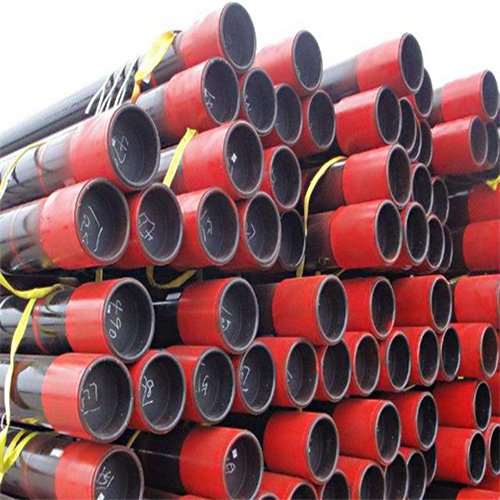
Résistance et durabilité :
Tubes en acier inoxydable soudés ou sans soudure
Les tubes en acier inoxydable sont un matériau polyvalent utilisé dans diverses industries pour sa résistance à la corrosion, sa durabilité et son attrait esthétique. Lorsqu’il s’agit de tubes en acier inoxydable, deux types courants sont soudés et sans soudure. Chaque type a son propre ensemble de caractéristiques, d’avantages et d’applications.
Tubes soudés en acier inoxydable :
 Les tubes soudés sont fabriqués en soudant ensemble des bandes d’acier inoxydable. Ce processus consiste à joindre les bords des bandes d’acier en utilisant de la chaleur et de la pression pour créer un tube continu. Bien que le soudage puisse introduire certaines zones de faiblesse en raison des zones affectées par la chaleur, les techniques de soudage modernes ont considérablement amélioré la résistance et la durabilité des tubes soudés en acier inoxydable.
L’un des principaux avantages des tubes soudés en acier inoxydable est leur rentabilité. Le processus de soudage est généralement plus économique que le processus de fabrication sans soudure, ce qui fait des tubes soudés une option plus économique pour de nombreuses applications. De plus, les tubes soudés peuvent être produits dans une large gamme de tailles et de formes pour répondre à des exigences de conception spécifiques.
Les tubes soudés en acier inoxydable sont couramment utilisés dans les applications où une résistance élevée est requise. Son intégrité structurelle le rend adapté à une utilisation dans les composants structurels, tels que les poutres et les cadres de support, ainsi que dans les récipients sous pression où la fiabilité et la durabilité sont primordiales. Les tubes soudés sont également préférés dans les applications où l’aspect esthétique n’est pas une préoccupation majeure, car les cordons de soudure peuvent être visibles.
Malgré leurs résistances, les tubes soudés en acier inoxydable peuvent présenter des limites dans certaines applications. Le processus de soudage peut créer des zones de concentration de contraintes, susceptibles d’affecter les performances globales du tube dans des conditions extrêmes. De plus, les tubes soudés peuvent être plus sensibles à la corrosion au niveau des cordons de soudure s’ils ne sont pas correctement traités ou finis.
En conclusion, les tubes soudés en acier inoxydable offrent une solution rentable et polyvalente pour diverses applications industrielles où la résistance et la durabilité sont essentielles. Les techniques de soudage modernes ont amélioré la qualité et la fiabilité des tubes soudés, ce qui en fait un choix viable pour les applications structurelles et d’appareils sous pression. Cependant, il est important de considérer les exigences spécifiques de chaque projet pour déterminer si les tubes soudés sont l’option la plus appropriée.
On the other hand, seamless Stainless Steel Tubing is manufactured without any welding or seams. This results in a Smoother internal surface, which can improve the flow characteristics of fluids or Gases passing through the tubing. Seamless tubing is known for its superior strength and durability, making it ideal for high-pressure and high-temperature applications where reliability is paramount. The absence of welds in seamless tubing eliminates the risk of weak points, enhancing its structural integrity.
In terms of strength, seamless stainless steel tubing generally outperforms welded tubing due to its homogeneous structure and absence of weld seams. Seamless tubing is better able to withstand internal and external pressures, making it suitable for demanding industrial environments where safety and reliability are crucial. The seamless manufacturing process ensures consistent Material properties throughout the Tubing, contributing to its superior strength characteristics.
Durability is another key factor to consider when comparing welded and seamless stainless steel tubing. Seamless tubing’s uniform structure and lack of welds make it more resistant to corrosion, fatigue, and stress cracking compared to welded tubing. This enhanced durability extends the lifespan of seamless tubing, reducing the need for frequent Maintenance or replacement. In applications where longevity and reliability are essential, seamless stainless steel tubing is often the preferred choice.
2×2 tubular steelIn conclusion, the choice between welded and seamless stainless steel tubing depends on the specific requirements of the application. While welded tubing offers cost-effective versatility, seamless tubing excels in terms of strength and durability, particularly in high-pressure and high-temperature environments. Understanding the strengths and limitations of each manufacturing method is crucial in selecting the most suitable stainless steel tubing for a given application, ensuring optimal performance and longevity.
– Welded Stainless Steel Tubing: Welded tubing is created by welding strips of stainless steel together. While the welding process can introduce some areas of weakness, modern welding techniques have significantly improved the strength and durability of welded stainless steel tubing. Welded tubing is suitable for applications where High strength is required, such as in structural components or pressure vessels
Welded vs. Seamless Stainless Steel Tubing
Stainless steel tubing is a versatile material used in various industries for its Corrosion resistance, durability, and aesthetic appeal. When it comes to stainless steel tubing, two common types are welded and seamless. Each type has its own set of characteristics, advantages, and applications.
Welded Stainless Steel Tubing:
Welded tubing is manufactured by welding together strips of stainless steel. This process involves joining the edges of the steel strips using heat and pressure to create a continuous tube. While welding can introduce some areas of weakness due to the heat-affected zones, modern welding techniques have significantly improved the strength and durability of welded stainless steel tubing.
One of the key advantages of welded stainless steel tubing is its cost-effectiveness. The welding process is generally more economical than the seamless manufacturing process, making welded tubing a more budget-friendly option for many applications. Additionally, welded tubing can be produced in a wide range of sizes and shapes to meet specific design requirements.
Welded stainless steel tubing is commonly used in applications where high strength is required. Its structural integrity makes it suitable for use in structural components, such as support beams and frames, as well as in pressure vessels where reliability and durability are paramount. Welded tubing is also preferred in applications where the aesthetic appearance is not a primary concern, as the welding seams may be visible.
Despite its strengths, welded stainless steel tubing may have limitations in certain applications. The welding process can create areas of stress concentration, which may affect the overall performance of the tubing under extreme conditions. Additionally, welded tubing may be more susceptible to corrosion at the weld seams if not properly treated or finished.
In conclusion, welded stainless steel tubing offers a cost-effective and versatile solution for various industrial applications where strength and durability are essential. Modern welding techniques have enhanced the quality and reliability of welded tubing, making it a viable choice for structural and pressure vessel applications. However, it is important to consider the specific requirements of each project to determine whether welded tubing is the most suitable option.