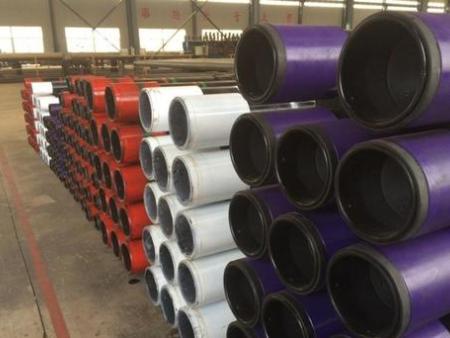
Amélioration de la durabilité des matériaux de cuvelage pétrolier : innovations et techniques
La recherche de solutions énergétiques durables a également suscité l’intérêt pour les matériaux de boîtier respectueux de l’environnement. Les polymères biodégradables et les matériaux composites dérivés de ressources renouvelables sont étudiés comme alternatives à l’acier traditionnel. Ces matériaux offrent un impact environnemental réduit pendant la production et l’élimination tout en conservant des propriétés mécaniques adéquates pour les applications sur les champs pétrolifères.
À mesure que le secteur de l’énergie évolue, la demande de matériaux de tubage pétrolier offrant des performances sans compromis dans des conditions de plus en plus difficiles contiNue de croître. La convergence de la science avancée des matériaux, des techniques de fabrication innovantes et d’un engagement en faveur du développement durable remodèle le paysage de l’ingénierie des champs pétrolifères. En affinant les splendides performances du tubage pétrolier grâce à l’innovation continue et au progrès technologique, l’industrie se lance dans une nouvelle aventure énergétique, prête à répondre aux demandes de l’avenir tout en garantissant l’extraction efficace et responsable des ressources énergétiques vitales.
Furthermore, the application of nanotechnology has opened new frontiers in strengthening Oil Casing Materials. Nanostructured materials offer superior mechanical properties and can be tailored to enhance specific attributes such as hardness, wear resistance, and thermal stability. Through precise control at the atomic and molecular levels, researchers have achieved remarkable improvements in material performance, pushing the boundaries of what was once thought possible in oilfield engineering.
In tandem with material innovations, advanced manufacturing techniques play a pivotal role in refining oil casing durability. Additive manufacturing, or 3D printing, has emerged as a disruptive force in the industry. This technology allows for the creation of complex geometries with reduced material waste, offering designers unprecedented freedom to optimize casing designs for strength and functionality. Moreover, processes such as laser cladding enable the deposition of wear-resistant coatings onto casing surfaces, further bolstering their longevity and performance in abrasive environments.
Beyond metallurgy and manufacturing, ongoing research focuses on enhancing the predictive capabilities of material performance. Computational modeling and simulation techniques enable engineers to simulate the behavior of casing materials under various operating conditions. This predictive capability facilitates the design of more robust structures and informs Maintenance schedules to maximize operational uptime and safety.
 The quest for sustainable energy solutions has also spurred interest in eco-friendly casing materials. Biodegradable polymers and composite materials derived from renewable resources are being explored as alternatives to traditional Steel. These materials offer reduced environmental impact during production and disposal while maintaining adequate mechanical properties for oilfield applications.
As the energy sector evolves, the demand for oil casing materials that deliver uncompromising performance under increasingly challenging conditions continues to grow. The convergence of advanced materials science, innovative manufacturing techniques, and a commitment to sustainability is resh APIng the landscape of oilfield engineering. By refining the splendid performance of oil casing through continuous innovation and technological advancement, the industry embarks on a new energy adventure, poised to meet the demands of the future while ensuring the efficient and responsible extraction of vital energy resources.