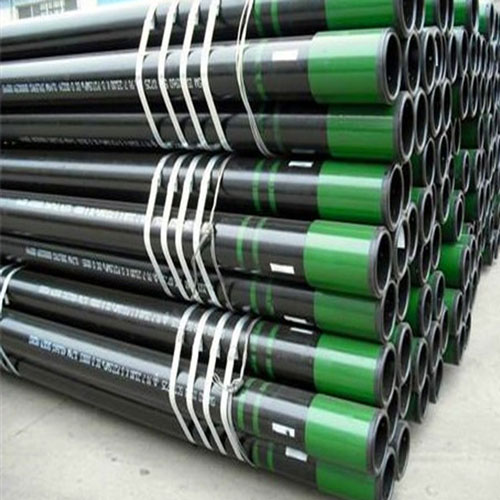
Formulations d’alliages avancées pour une résistance améliorée au fluage dans les enveloppes pétrolières sans soudure
Application des techniques de traitement thermique pour améliorer la résistance au fluage des enveloppes pétrolières sans soudure
Mise en œuvre du vieillissement sous contrainte et du raffinement microstructural dans les normes ASTM pour les enveloppes pétrolières sans soudure
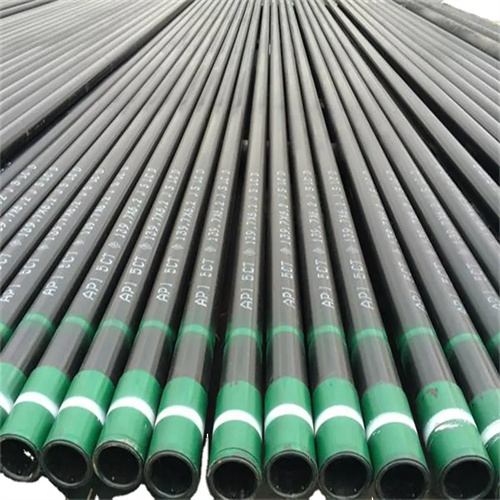
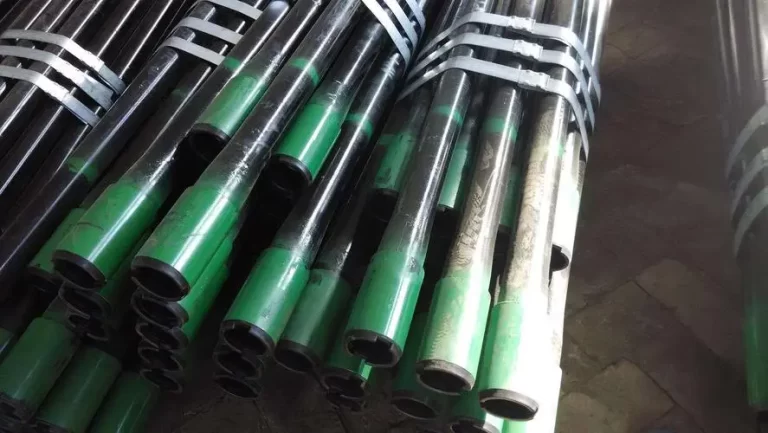
L’amélioration de la résistance au fluage des boîtiers pétroliers sans soudure est une préoccupation majeure dans l’industrie pétrolière et gazière, où ces composants sont soumis à des températures et des pressions élevées sur des périodes prolongées. L’obtention d’une résistance supérieure au fluage implique des transformations précises guidées par les normes ASTM et API, notamment par la mise en œuvre du vieillissement sous contrainte et du raffinement microstructural.
Le fluage, la déformation en fonction du temps des matériaux sous charge constante, pose des défis importants pour la durabilité et la fiabilité des produits pétroliers. boîtiers. Pour résoudre ce problème, les normes ASTM ont évolué pour intégrer des techniques métallurgiques avancées visant à améliorer la résistance du matériau au fluage. Une technique essentielle est le vieillissement sous contrainte, qui consiste à soumettre le matériau à des niveaux contrôlés d’écrouissage suivi d’une exposition à une température modérée. Ce processus induit une évolution microstructurale qui améliore à la fois la résistance et la résistance au fluage du matériau de l’enveloppe.
Les normes ASTM spécifient les conditions précises de vieillissement sous contrainte, garantissant ainsi la cohérence et la fiabilité entre les différents fabricants et produits. Ces normes décrivent les températures, durées et vitesses de refroidissement requises pour obtenir le raffinement microstructural souhaité sans compromettre les autres propriétés mécaniques. En adhérant à ces directives, les fabricants peuvent produire des boîtiers sans soudure qui présentent une résistance améliorée à la déformation par fluage, prolongeant ainsi leur durée de vie opérationnelle dans des environnements de fond difficiles.
Le raffinement microstructural joue un rôle complémentaire dans l’amélioration de la résistance au fluage. Il s’agit d’optimiser la structure des grains et la répartition des éléments d’alliage au sein du matériau de l’enveloppe. Les normes ASTM fournissent des protocoles détaillés pour les processus de composition des alliages et de traitement thermique qui favorisent la formation de structures à grains fins et de mécanismes de renforcement de la dispersion. Ces microstructures raffinées inhibent le mouvement des dislocations et des joints de grains pendant le fluage, augmentant ainsi efficacement la résistance du matériau à la déformation au fil du temps.
La mise en œuvre de ces normes nécessite un contrôle méticuleux des processus de fabrication, de la sélection des matières premières aux tests du produit final. Les fabricants doivent surveiller et ajuster soigneusement les paramètres tels que les vitesses de chauffage et de refroidissement, les températures de recuit et les méthodes de trempe pour obtenir les caractéristiques microstructurales souhaitées spécifiées par les normes ASTM. Ce niveau de précision garantit que les tubages pétroliers sans soudure répondent à des exigences de performance strictes dans des conditions extrêmes de fond de trou. Les normes API complètent les directives ASTM en se concentrant sur les performances globales et la fiabilité des tubages pétroliers dans les environnements opérationnels. Ces normes intègrent des protocoles de test spécifiques pour évaluer la résistance au fluage dans des conditions de fond simulées, y compris des températures et des pressions élevées. En soumettant les boîtiers à des tests de vieillissement accéléré et à des simulations d’exposition à long terme, les normes API valident l’efficacité des techniques prescrites par l’ASTM pour améliorer la résistance au fluage et la durabilité.
L’évolution des normes ASTM et API reflète les progrès continus dans la science des matériaux et les pratiques d’ingénierie adaptées aux demandes de l’industrie pétrolière et gazière. Les efforts continus de recherche et de développement conduisent à des améliorations dans la conception des alliages, les technologies de traitement et les méthodologies de test visant à améliorer davantage la résistance au fluage des carters pétroliers sans soudure. Les mécanismes de collaboration et de retour d’information de l’industrie garantissent que les normes restent pertinentes et efficaces pour relever les défis émergents et les progrès technologiques.
En conclusion, les transformations précises guidées par les normes ASTM et API sont essentielles à l’amélioration de la résistance au fluage des boîtiers pétroliers sans soudure. Grâce à la mise en œuvre stratégique de techniques de vieillissement sous contrainte et de raffinement microstructural, les fabricants peuvent produire des matériaux hautes performances capables de résister à une exposition prolongée à des conditions extrêmes de fond de trou. Ces normes garantissent non seulement la fiabilité et la longévité des cuvelages pétroliers, mais contribuent également à la sécurité et à l’efficacité globales des opérations pétrolières et gazières dans le monde entier. Alors que les innovations technologiques contiNuent de stimuler l’évolution des normes, l’industrie reste prête à relever les défis futurs avec des solutions robustes et durables.
In the realm of seamless petroleum Casings, the enhancement of creep resistance through precise transformations in API and ASTM standards is a critical aspect driven by the application of advanced heat treatment techniques. Creep resistance, the ability of a Material to withstand deformation under prolonged exposure to high temperatures and stress, is paramount in ensuring the reliability and longevity of petroleum casings in harsh operational environments.
API (American Petroleum Institute) and ASTM (American Society for Testing and Materials) standards play pivotal roles in defining the quality, performance, and safety parameters for seamless petroleum casings. These standards continually evolve to incorporate advancements in materials science and engineering practices, particularly in enhancing creep resistance through heat treatment techniques.
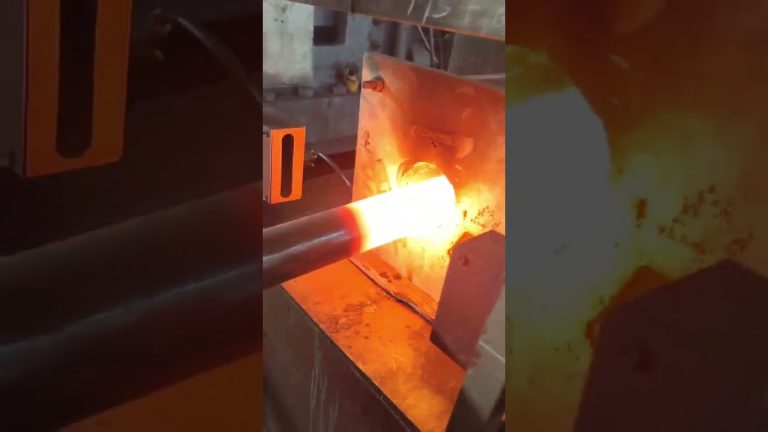
Heat treatment methods such as quenching and tempering, normalization, and annealing are employed to modify the microstructure of Steel used in petroleum casings. Each technique involves controlled heating and cooling cycles that induce specific transformations in the material, thereby optimizing its mechanical properties, including creep resistance.
Quenching and tempering, for instance, involves rapid cooling (quenching) from a high temperature followed by tempering at a lower temperature. This process refines the microstructure of the steel, enhancing its strength and toughness while maintaining adequate ductility and creep resistance. The precise parameters of quenching and tempering are stipulated in API and ASTM standards to ensure consistent and reliable performance across different manufacturing processes and environments.

Normalization is another heat treatment technique where steel is heated to a temperature above its transformation range and then cooled in still air. This process refines the grain structure of the steel, improving its uniformity and reducing internal stresses, which in turn enhances its resistance to creep deformation over time.
Annealing involves heating the steel to a specific temperature and then cooling it slowly to room temperature. This process relieves internal stresses, softens the material, and refines its grain structure, thereby improving its ductility and resistance to creep under sustained loads.
API and ASTM standards provide guidelines not only for the heat treatment processes themselves but also for the testing and evaluation of the resultant material properties. These standards specify parameters such as heating and cooling rates, soaking times, and critical temperatures to ensure reproducibility and reliability in the enhancement of creep resistance across different batches and Manufacturers.
Furthermore, the standards outline testing methodologies such as creep testing, which simulates long-term exposure to stress and elevated temperatures. Creep testing evaluates how a material deforms over time under constant stress, providing crucial data for predicting its behavior in service conditions and validating its compliance with performance standards.
The evolution of API and ASTM standards reflects ongoing research and development efforts aimed at pushing the boundaries of material performance in petroleum casing applications. Advances in metallurgical science, computational modeling, and manufacturing technologies continue to drive innovations in heat treatment techniques, enabling seamless casings to withstand increasingly demanding operational conditions with enhanced reliability and durability.
In conclusion, the precise transformations in API and ASTM standards for enhancing the creep resistance of seamless petroleum casings underscore the industry’s commitment to ensuring safety, efficiency, and sustainability in Oil and Gas exploration and production. By leveraging advanced heat treatment techniques and rigorous adherence to standards, manufacturers can consistently deliver high-performance materials capable of withstanding the rigors of extreme environments over prolonged operational lifetimes.
Implementation of Strain Aging and Microstructural Refinement in ASTM Standards for Seamless Petroleum Casings
The enhancement of creep resistance in seamless petroleum casings is a critical concern in the oil and gas industry, where these components are subjected to high temperatures and pressures over prolonged periods. Achieving superior creep resistance involves precise transformations guided by ASTM and API standards, particularly through the implementation of strain aging and microstructural refinement.
Creep, the time-dependent deformation of materials under constant load, poses significant challenges to the durability and reliability of petroleum casings. To address this, ASTM standards have evolved to incorporate advanced metallurgical techniques aimed at enhancing the material’s resistance to creep. One pivotal technique is strain aging, which involves subjecting the material to controlled levels of cold working followed by a moderate temperature exposure. This process induces a microstructural evolution that improves both the strength and creep resistance of the casing material.
ASTM standards specify the precise conditions for strain aging, ensuring consistency and reliability across different manufacturers and products. These standards outline the required temperatures, durations, and cooling rates necessary to achieve the desired microstructural refinement without compromising other mechanical properties. By adhering to these guidelines, manufacturers can produce seamless casings that exhibit enhanced resistance to creep deformation, thereby extending their operational lifetimes in harsh downhole environments.
Microstructural refinement plays a complementary role in enhancing creep resistance. This involves optimizing the grain structure and distribution of alloying elements within the casing material. ASTM standards provide detailed protocols for alloy composition and heat treatment processes that promote the formation of fine-grained structures and dispersion strengthening mechanisms. These refined microstructures inhibit the movement of dislocations and grain boundaries during creep, effectively increasing the material’s resistance to deformation over time.
The implementation of these standards requires meticulous control over manufacturing processes, from raw material selection to final product testing. Manufacturers must carefully monitor and adjust parameters such as heating and cooling rates, annealing temperatures, and quenching methods to achieve the desired microstructural characteristics specified by ASTM standards. This level of precision ensures that seamless petroleum casings meet stringent performance requirements under extreme downhole conditions.
API standards complement ASTM guidelines by focusing on the overall performance and reliability of petroleum casings in operational environments. These standards incorporate specific testing protocols to evaluate creep resistance under simulated downhole conditions, including high temperatures and pressures. By subjecting casings to accelerated aging tests and long-term exposure simulations, API standards validate the effectiveness of ASTM-prescribed techniques in enhancing creep resistance and durability.
The evolution of ASTM and API standards reflects ongoing advancements in materials science and engineering practices tailored to the demands of the oil and gas industry. Continuous research and development efforts drive improvements in alloy design, processing technologies, and testing methodologies aimed at further enhancing the creep resistance of seamless petroleum casings. Industry collaboration and feedback mechanisms ensure that standards remain relevant and effective in addressing emerging challenges and technological advancements.
In conclusion, the precise transformations guided by ASTM and API standards are pivotal in enhancing the creep resistance of seamless petroleum casings. Through the strategic implementation of strain aging and microstructural refinement techniques, manufacturers can produce high-performance materials capable of withstanding prolonged exposure to extreme downhole conditions. These standards not only ensure the reliability and longevity of petroleum casings but also contribute to the overall safety and efficiency of oil and gas operations worldwide. As technological innovations continue to drive the evolution of standards, the industry remains poised to meet future challenges with robust and sustainable solutions.