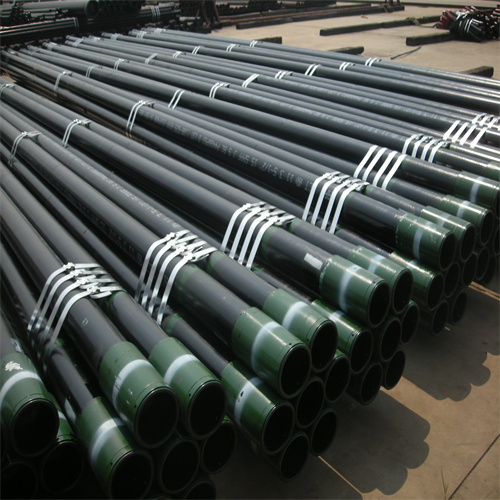
Der Prozess des Spiralschweißens bei Öl-/Gasbohrungen, SSAW API 5L-Kohlenstoffstahlrohr Spiralschweißen ist ein entscheidender Prozess bei der Herstellung von SSAW API 5L-Kohlenstoffstahlrohren für…
Der Prozess des Spiralschweißens bei Öl-/Gasbohrungen, SSAW API 5L-Kohlenstoffstahlrohr
Spiralschweißen ist ein entscheidender Prozess bei der Herstellung von SSAW API 5L-Kohlenstoffstahlrohren für Öl- und Gasbohrungen. Bei dieser Methode werden zwei Stahlbänder kontinuierlich zu einer Spirale geformt und miteinander verschweißt. Das resultierende spiralgeschweißte Rohr verfügt über eine hervorragende Festigkeit und Haltbarkeit und eignet sich daher ideal für den Einsatz in der Öl- und Gasbohrindustrie.Der Prozess des Spiralschweißens beginnt mit der Vorbereitung der Stahlbänder. Diese Bänder bestehen typischerweise aus hochwertigem Kohlenstoffstahl, der hervorragende mechanische Eigenschaften und Korrosionsbeständigkeit bietet. Anschließend werden die Streifen sorgfältig auf Mängel oder Unvollkommenheiten untersucht, die die Integrität des Endprodukts beeinträchtigen könnten.Sobald die Stahlbänder die Inspektion bestanden haben, werden sie einer Spiralformmaschine zugeführt. Diese Maschine biegt die Streifen nach und nach in eine Spiralform, wobei jede Umdrehung die vorherige überlappt. Die präzise StEuerung der Formmaschine stellt sicher, dass die Spiralform über die gesamte Länge des Rohrs gleichmäßig und gleichmäßig ist.
Beschriftungen a
Berechnete Masse c
AGB für die nominale lineare Masse b,c
Wandstärke
em, Massengewinn oder -verlust durch Endbearbeitung d
Außendurchmesser
Innendurchmesser
Driftdurchmesser
Plain-End
kg
Rundfaden
Stützfaden
wpe
D
kg/m
t
D
mm
kg/m
Kurz
Lang
RC
SCC
mm
mm
mm
1
2
3
4
5
6
7
8
9
10
11
12
8 5/8
24
219.08
35.72
6.71
205.66
202.48
35.14
10.93
8 5/8
28
219.08
41.67
7.72
203.64
200.46
40.24
10.07
12.44
12.57
2.51
8 5/8
32
219.08
47.62
8.94
201.2
200,02 e 198,02 195,58
46.33
9.39
12.44
12.57
2.51
8 5/8
32
219.08
47.62
8.94
201.2
193,68 e
46.33
9.39
11.6
11.68
1.62
8 5/8
36
219.08
53.57
10.16
198.76
193.04
52.35
8.72
10.73
10.77
0.71
8 5/8
40
219.08
59.53
11.43
196.22
190.5
58.53
10.73
10.77
0.71
8 5/8
40
219.08
59.53
11.43
196.22
187.6
58.53
9.88
9.87
0.20
8 5/8
44
219.08
65.48
12.7
193.68
64.64
8.88
8.85
1.21
8 5/8
49
219.08
72.92
14.15
190.78
71.51
9 5/8
32.3
244.48
48.07
7.92
228.6
224.66
46.2
11
14.48
13,87
2,74
9 5/8
36
244.48
53.57
8.94
226.6
222.63
51.93
10.36
13.59
12.97
1.84
9 5/8
40
244.48
59.53
10.03
224.4
222,25 e 220,45 218,41 218,41 216,54 216,54
57.99
9.69
13.59
12.97
1.84
9 5/8
40
244.48
59.53
10.03
224.4
215,90 e
57.99
9.69
12.78
12.15
1.01
9 5/8
43.5
244.48
64.74
11.05
222.4
215,90 e 212,83 212,83
63.61
12,84 f
12.15
1.01
9 5/8
43.5
244.48
64.74
11.05
222.4
212,72 e
63.61
12.03
11.39
0.25
9 5/8
47
244.48
69.94
11.99
220.5
212,72 e 210,29 210,29 209,58 206,38 203,23 200,02
68.75
12.09 f
11.39
0.25
9 5/8
47
244.48
69.94
11.99
222.5
68.75
10.57
9.92
1.22
9 5/8
53.5
244.48
79.62
13.84
216.8
78.72
10,63 f
9.92
1.22
9 5/8
53.5
244.48
79.62
13.84
216.8
78.72
10.57
9.92
1.22
9 5/8
53.5
244.48
79.62
13.84
216.8
78.72
10,63 f
9.92
1.22
9 5/8
53.5
244.48
79.62
13.84
216.8
78.72
9.58
8.92
2.22
9 5/8
58.4
244.48
86.91
15.11
214.25
85.47
9,65 f
8.92
2.22
9 5/8
58.4
244.48
86.91
15.11
214.25
85.47
9.58
8.92
2.22
9 5/8
58.4
244.48
86.91
15.11
214.25
85.47
9,65 f
8.92
2.22
9 5/8
58.4
244.48
86.91
15.11
214.25
85.47
9 5/8
59.4
244.48
88.4
15.47
213.5
87.37
9 5/8
64.9
244.48
96.58
17.07
210.3
95.73
9 5/8
70.3
244.48
104.62
18.64
207.2
103.82
9 5/8
75.6
244.48
112.51
20.24
204
111.93
As the spiral shape is formed, the edges of the Steel strips are brought together. At this point, the welding process begins. A high-frequency electrical current is applied to the edges of the strips, causing them to heat up and melt. The molten edges are then fused together, creating a strong and continuous weld.Mobile AccessoriesTo ensure the quality of the weld, various measures are taken during the welding process. For instance, the welding speed is carefully controlled to maintain a consistent heat input. This helps to prevent overheating or underheating, which could lead to weak or defective welds. Additionally, the welding parameters, such as the current and voltage, are closely monitored and adjusted as needed.After the welding is complete, the spiral welded tube undergoes a series of inspections and tests. These include visual inspections to check for any surface defects, such as cracks or porosity. The tube is also subjected to Non-destructive testing methods, such as ultrasonic or radiographic testing, to detect any internal flaws that may compromise its integrity.Once the tube passes all the required inspections and tests, it is ready for further processing. This may involve additional treatments, such as heat treatment or surface coating, to enhance its performance and protect it from corrosion. The final product is then carefully packaged and prepared for shipment to the Oil and Gas drilling sites.In conclusion, the process of spiral welding plays a crucial role in the production of oil/gas drilling SSAW API 5L Carbon steel Tubes. This method ensures the creation of strong and durable tubes that can withstand the harsh conditions

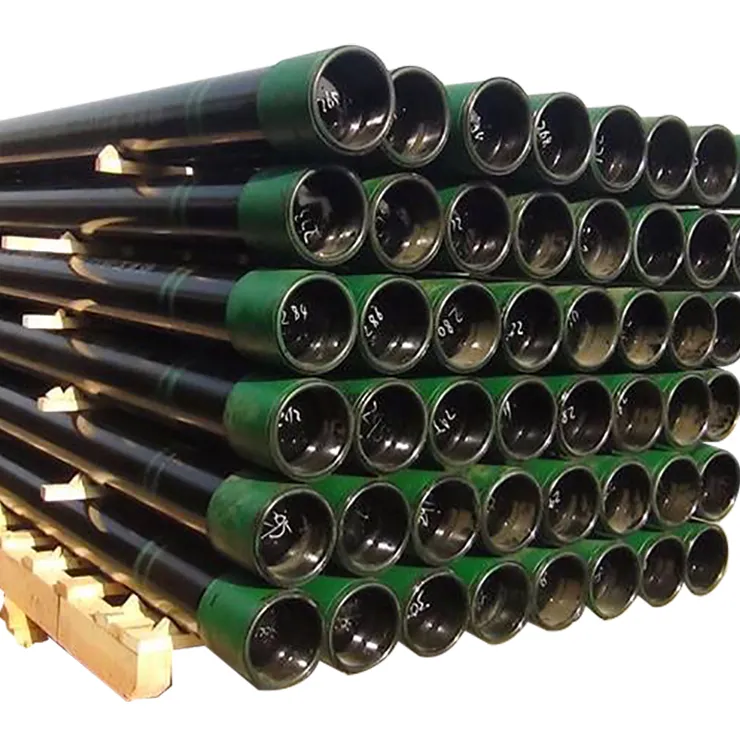 Sobald die Stahlbänder die Inspektion bestanden haben, werden sie einer Spiralformmaschine zugeführt. Diese Maschine biegt die Streifen nach und nach in eine Spiralform, wobei jede Umdrehung die vorherige überlappt. Die präzise StEuerung der Formmaschine stellt sicher, dass die Spiralform über die gesamte Länge des Rohrs gleichmäßig und gleichmäßig ist.