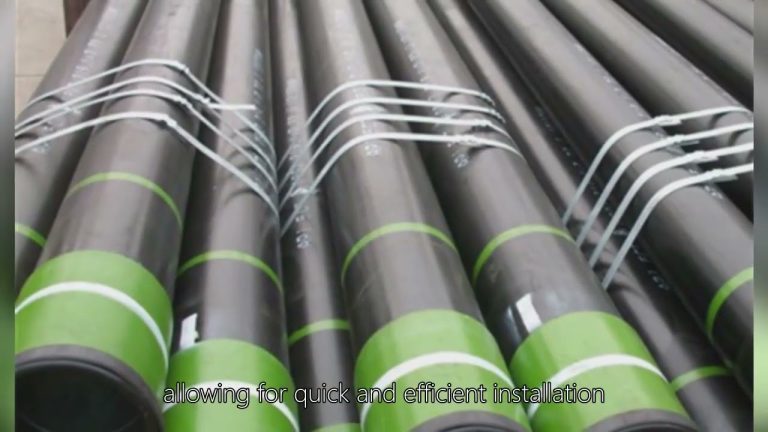
Résistance à la corrosion dans les qualités de caissons et de tubes OCTG :
tube d’huile Meilleurs grossistes en Chine
– Discuter de l’importance de la résistance à la corrosion dans les tubages et tubes OCTG
Dans le domaine des OCTG, différentes qualités de boîtiers et de tubes sont conçues pour résister à différents niveaux d’environnements corrosifs. La sélection de la qualité appropriée est primordiale pour garantir la sécurité et l’efficacité des opérations pétrolières et gazières. Les qualités supérieures offrent généralement une résistance supérieure à la corrosion, ce qui les rend adaptées aux conditions plus difficiles telles que le forage offshore ou les environnements présentant des niveaux élevés de sulfure d’hydrogène ou de dioxyde de carbone.
L’une des qualités les plus courantes conNues pour sa résistance à la corrosion est la qualité API 5ct l80. Cette nuance est largement utilisée dans les environnements de corrosion modérée à élevée en raison de ses éléments d’alliage qui améliorent sa résistance aux agents corrosifs. La nuance L80 est connue pour sa durabilité et sa fiabilité, ce qui en fait un choix populaire pour une large gamme d’applications dans l’industrie pétrolière et gazière.
En revanche, la nuance api 5ct P110 est un autre choix populaire connu pour sa haute résistance et sa bonne qualité. résistance à la corrosion. Cette qualité est souvent utilisée dans des environnements plus exigeants où une solidité et une résistance à la corrosion plus élevées sont requises. La nuance P110 offre un équilibre entre résistance et ténacité, ce qui la rend adaptée aux conditions de forage difficiles.
Au-delà des nuances L80 et P110, il existe d’autres nuances spécialisées disponibles qui répondent à des exigences spécifiques de résistance à la corrosion. Par exemple, la nuance API 5CT C95 est conçue pour les applications où une résistance modérée à la corrosion est nécessaire, offrant une solution rentable sans compromettre les performances.
Il est essentiel pour les opérateurs et les ingénieurs de l’industrie pétrolière et gazière d’évaluer soigneusement la corrosion. propriétés de résistance de différentes qualités d’OCTG en fonction des conditions de fonctionnement spécifiques et des facteurs environnementaux. La réalisation d’évaluations approfondies et la sélection de la qualité appropriée peuvent contribuer à atténuer les risques associés aux défaillances liées à la corrosion, garantissant ainsi la sécurité et l’efficacité des opérations de forage.
En conclusion, les qualités des tubages et des tubes OCTG jouent un rôle essentiel dans la détermination de la résistance à la corrosion. et la performance globale de ces composants essentiels dans l’industrie pétrolière et gazière. Comprendre les caractéristiques et les propriétés des différentes qualités est crucial pour prendre des décisions éclairées qui améliorent la fiabilité et la longévité des opérations de forage. En sélectionnant la bonne nuance en fonction des exigences de résistance à la corrosion, les opérateurs peuvent optimiser les performances des produits OCTG et assurer le succès des projets pétroliers et gaziers.

In addition to the base Material composition, the surface treatment of octg Casing and Tubing can also influence their Corrosion resistance. Coatings such as epoxy, zinc, or chrome plating can provide an extra layer of protection against corrosion, extending the service life of the equipment in corrosive environments.
It is essential for operators to carefully assess the environmental conditions of the well, including factors such as temperature, pressure, fluid composition, and pH levels, to determine the most suitable grade of octg casing and tubing. Failure to select the appropriate material can lead to premature corrosion, equipment failure, and costly Repairs or replacements.
Overall, the selection of OCTG casing and tubing grades with the right level of corrosion resistance is crucial for ensuring the integrity and longevity of Oil and Gas wells. By understanding the properties and performance characteristics of different grades, operators can make informed decisions that optimize the efficiency and reliability of their operations while minimizing the risk of corrosion-related issues.
– Discuss the importance of corrosion resistance in OCTG casing and tubing
OCTG, or oil country tubular goods, play a crucial role in the oil and gas industry, serving as the primary materials used in drilling and extraction operations. Among the various factors that determine the quality and performance of octg products, corrosion resistance stands out as a critical consideration. Corrosion can significantly impact the integrity and longevity of casing and Tubing, making it essential to understand the grades available and their corrosion-resistant properties.
In the realm of OCTG, different grades of casing and tubing are designed to withstand varying levels of corrosive environments. The selection of the appropriate grade is paramount to ensure the safety and efficiency of oil and gas operations. higher grades typically offer superior corrosion resistance, making them suitable for harsher conditions such as offshore drilling or environments with high levels of hydrogen sulfide or carbon dioxide.
One of the most common grades known for its corrosion resistance is the API 5CT L80 grade. This grade is widely used in moderate to high corrosion environments due to its alloying elements that enhance its resistance to corrosive agents. The L80 grade is known for its durability and reliability, making it a popular choice for a wide range of applications in the oil and gas industry.
In contrast, the API 5CT P110 grade is another popular choice known for its High strength and good corrosion resistance. This grade is often used in more demanding environments where higher strength and resistance to corrosion are required. The P110 grade offers a balance between strength and toughness, making it suitable for challenging drilling conditions.
Beyond the L80 and P110 grades, there are other specialized grades available that cater to specific corrosion resistance requirements. For example, the API 5CT C95 grade is designed for applications where moderate corrosion resistance is needed, offering a cost-effective solution without compromising on performance.
It is essential for operators and engineers in the oil and gas industry to carefully evaluate the corrosion resistance properties of different OCTG grades based on the specific operating conditions and environmental factors. Conducting thorough assessments and selecting the appropriate grade can help mitigate the risks associated with corrosion-related failures, ensuring the safety and efficiency of drilling operations.
In conclusion, the grades of OCTG casing and tubing play a vital role in determining the corrosion resistance and overall performance of these essential components in the oil and gas industry. Understanding the characteristics and properties of different grades is crucial for making informed decisions that enhance the reliability and longevity of drilling operations. By selecting the right grade based on corrosion resistance requirements, operators can optimize the performance of OCTG products and ensure the success of oil and gas projects.