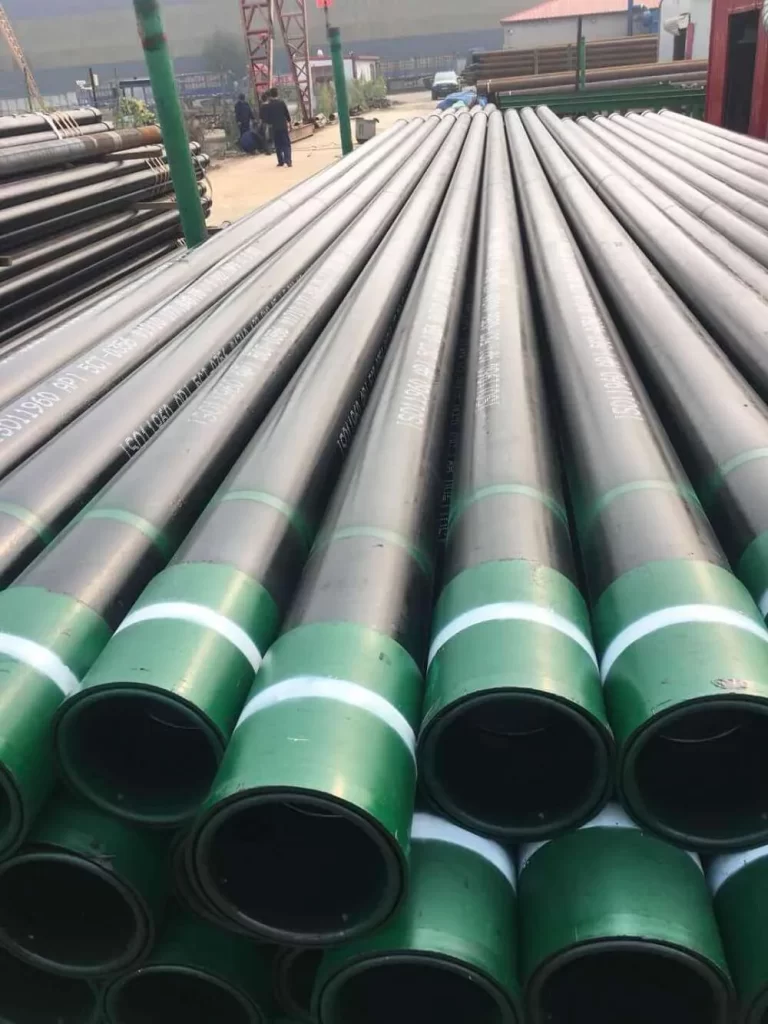
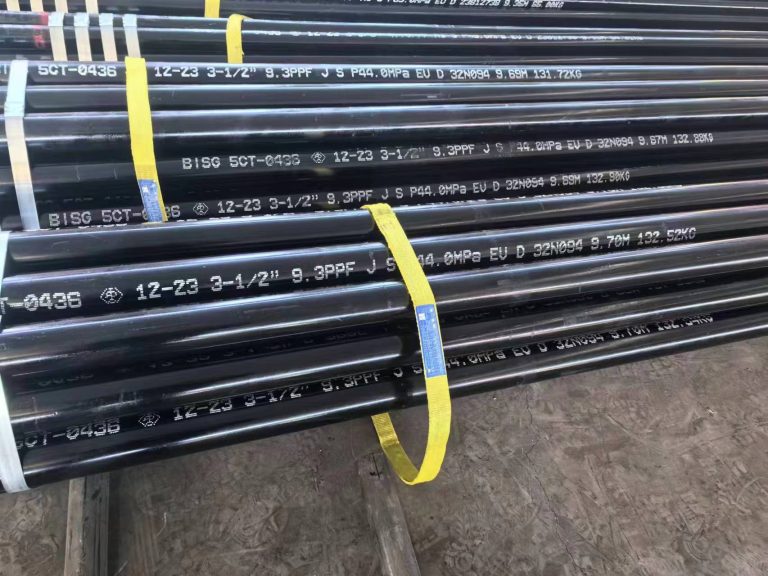
Key Specifications of API 5ct grade J55 Casing Pipe
API 5CT Grade J55 Notable Casing Pipe
API 5CT Grade j55 casing pipe plays a crucial role in the Oil and Gas industry, where its reliable performance and specific characteristics make it highly suitable for various applications. Understanding its key specifications is essential for stakeholders involved in exploration, drilling, and production activities.
API 5CT Grade J55 casing Pipes are crafted from Carbon Steel and are available in seamless, welded, and ERW types. These pipes undergo stringent manufacturing processes to meet API standards, ensuring they can withstand the demanding conditions of oil and gas wells. Typically, Grade J55 pipes are designed with a yield strength ranging from 379 MPa to 552 MPa (55,000 psi to 80,000 psi), making them resilient against high-pressure environments encountered during drilling operations.
One notable characteristic of Grade J55 casing pipes is their excellent weldability and relatively low cost compared to higher grades. This makes them a preferred choice for shallow to medium-depth wells where the corrosive conditions are less severe. The chemical composition of J55 casing pipes includes elements such as manganese and chromium, which enhance their mechanical properties and Corrosion resistance.
In terms of dimensions, API 5CT Grade J55 casing pipes are available in a range of sizes, typically from 4 1/2 inches to 20 inches in Diameter. These dimensions are standardized to ensure compatibility with various well designs and equipment. The pipes are Threaded and coupled according to API specifications to facilitate easy installation and reliable performance under operational stresses.
api 5ct K55 CASING Best chinese ExporterMoreover, Grade J55 casing pipes adhere to strict quality control measures during manufacturing. They are inspected for dimensional accuracy, mechanical properties, and surface finish to ensure compliance with API 5CT standards. This rigorous testing guarantees that each pipe meets the required performance criteria for its intended application, whether it’s for surface casing, Production casing, or conductor casing.
In practical terms, API 5CT Grade J55 casing pipes are employed in a wide range of well conditions, including tHose with moderate pressure and mild corrosive environments. Their versatility extends to both onshore and offshore drilling operations, where they provide structural integrity and support to the wellbore.
Transitioning to operational considerations, the installation of Grade J55 casing pipes involves meticulous planning and adherence to safety protocols. Proper handling and storage are crucial to prevent damage to the pipes before deployment. Additionally, Connections between casing joints must be carefully inspected to ensure leak-free performance and operational reliability.
Furthermore, the longevity of Grade J55 casing pipes depends on factors such as well depth, formation characteristics, and production conditions. Regular Maintenance and periodic inspection are recommended to monitor the integrity of the casing and mitigate potential risks associated with corrosion or mechanical damage over time.
In conclusion, API 5CT Grade J55 casing pipes represent a critical component in the oil and gas industry’s infrastructure. Their robust Construction, favorable mechanical properties, and cost-effectiveness make them a preferred choice for a variety of well applications. Understanding the key specifications and operational considerations of Grade J55 casing pipes is essential for stakeholders seeking reliable and efficient solutions in drilling and production operations.
This comprehensive overview underscores the importance of Grade J55 casing pipes in supporting the exploration and extraction of hydrocarbon resources, emphasizing their role in maintaining well integrity and operational efficiency throughout the lifecycle of oil and gas wells.
Applications and Uses of API 5CT Grade J55 Casing Pipe
API 5CT Grade J55 Notable Casing Pipe
API 5CT Grade J55 casing pipe serves a pivotal role in various industries, renowned for its robustness and versatility. Manufactured to stringent standards, this grade of casing pipe finds wide-ranging applications across different sectors due to its reliable performance and adaptability to diverse environmental conditions.
Primarily used in oil and gas exploration and production, API 5CT Grade J55 casing pipe is designed to withstand high pressure and corrosive environments encountered during drilling operations. Its composition and mechanical properties make it suitable for both shallow and deep well applications. The pipe’s ability to endure extreme temperatures and pressures ensures the integrity of the wellbore, safeguarding the extraction process and enhancing operational efficiency.
Beyond its primary application in the oil and gas sector, API 5CT Grade J55 casing pipe also finds utility in geothermal wells. These wells, which exploit heat from beneath the earth’s surface, require durable casing that can withstand the demanding conditions associated with geothermal energy extraction. The corrosion resistance and thermal stability of Grade J55 make it an ideal choice for such applications, ensuring prolonged operational life and minimal maintenance requirements.
Moreover, API 5CT Grade J55 casing pipe plays a crucial role in environmental remediation projects. These projects often involve drilling activities to monitor or mitigate contamination in soil and groundwater. The casing pipe’s ability to protect the wellbore and maintain well integrity is essential in ensuring the success of these remediation efforts. Its reliable performance in adverse environmental conditions makes it a preferred option for such critical applications.
In addition to its industrial applications, API 5CT Grade J55 casing pipe is utilized in construction projects that involve directional drilling and trenchless technology. These methods require casing pipes that can navigate through challenging subsurface conditions while maintaining structural integrity. The durability and flexibility of Grade J55 casing pipe enable contractors to execute these projects efficiently, minimizing disruption to surrounding infrastructure and reducing overall project costs.
 Furthermore, API 5CT Grade J55 casing pipe contributes to the sustainability of water resource management through its application in water wells. These wells provide essential water supply for agricultural, industrial, and municipal purposes. The casing pipe’s resistance to corrosion and chemical stability ensure the purity and safety of the water extracted, meeting stringent regulatory standards for potable water.
In conclusion, API 5CT Grade J55 casing pipe stands out for its versatility and reliability across a spectrum of industries and applications. From oil and gas exploration to geothermal energy, environmental remediation, construction, and water resource management, this grade of casing pipe contiNues to demonstrate its value in safeguarding operations and enhancing efficiency. Its robust design, coupled with adherence to strict manufacturing standards, underscores its reputation as a preferred choice for demanding drilling and construction projects worldwide. As industries evolve and technological advancements continue to drive innovation, API 5CT Grade J55 casing pipe remains at the forefront, meeting the diverse needs of modern infrastructure and resource development.
Comparison of API 5CT Grade J55 with Other Casing pipe grades
API 5CT Grade J55 Notable Casing Pipe
API 5CT Grade J55 is a widely used casing pipe grade in the Petroleum Industry due to its cost-effectiveness and suitability for various applications. Understanding its characteristics and comparing it with other grades is crucial for making informed decisions in oil and gas operations.
Grade J55 casing pipes are known for their moderate strength and good welding performance. They are primarily used in shallow to medium-depth wells where geological conditions are relatively less demanding. The chemical composition of J55 includes carbon, manganese, and silicon, ensuring adequate mechanical properties and resistance to corrosion in mild environments. This grade is particularly favored for its balance between performance and cost, making it economical for many drilling projects.
Comparing API 5CT Grade J55 with other casing pipe grades reveals distinct advantages and considerations. One prominent contrast is with API 5CT Grade K55, which shares similar chemical composition but differs slightly in mechanical properties. Grade K55 has higher tensile strength and yield strength compared to J55, making it suitable for deeper wells and more challenging drilling conditions. However, Grade K55 may also come at a higher cost due to its enhanced performance characteristics.
In contrast, API 5CT Grade N80 Casing pipes offer superior mechanical properties compared to both J55 and K55. Grade N80 has higher tensile strength, hardness, and resistance to corrosion, which are essential for more demanding drilling environments such as deep wells and harsh geological formations. Despite its advantages, Grade N80 tends to be more expensive than J55 and K55, which can influence cost considerations in project planning.
Another important comparison is with API 5CT Grade l80 casing pipes, which are known for their excellent mechanical properties and resistance to corrosion. Grade L80 is suitable for wells with high-pressure environments and corrosive conditions, where durability and reliability are critical. However, the higher alloy content of L80 contributes to increased costs, making it a choice for projects where performance outweighs initial expenditure concerns.
For operators and engineers selecting casing pipes, the choice between different grades, including J55, depends on specific well conditions, budget constraints, and long-term operational goals. While J55 offers economic advantages and satisFactory performance in moderate conditions, higher grades like N80 and L80 provide enhanced capabilities for more challenging drilling scenarios.
It is essential to consider factors such as well depth, geological characteristics, production requirements, and budget allocations when evaluating casing pipe options. Collaborating closely with Suppliers and Manufacturers ensures that the selected grade meets all technical specifications and regulatory requirements for safe and efficient well operations.
In conclusion, API 5CT Grade J55 stands out as a cost-effective and versatile option for casing pipes in the petroleum industry. Its balanced combination of mechanical properties, corrosion resistance, and weldability makes it suitable for a wide range of drilling applications, particularly in shallow to medium-depth wells. When comparing J55 with other grades such as K55, N80, and L80, operators must weigh the specific performance requirements against project budgets to make informed decisions. By understanding these distinctions, stakeholders can optimize well construction and operational efficiency while maintaining cost-effectiveness in oil and gas exploration and production activities.