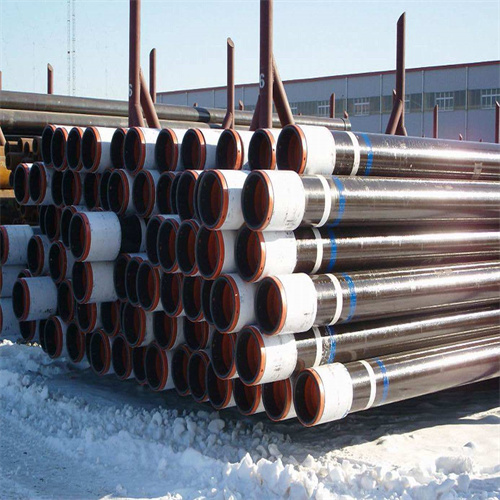
Aperçu des spécifications des tuyaux et tubages API 5ct l80
Analyse détaillée des propriétés mécaniques des tuyaux API 5CT L80
Comparaison de l’API 5CT L80 avec d’autres qualités dans les applications de boîtiers et de tubes
Les tubes de tubage et de tubage API 5CT L80 jouent un rôle crucial dans l’industrie pétrolière et gazière, offrant des propriétés spécifiques qui répondent à divers besoins opérationnels. Comprendre ses spécifications et les comparer avec d’autres qualités permet de comprendre pourquoi le L80 est un choix privilégié dans de nombreuses applications.
API 5CT Le L80 est un type de tubage et de tube conforme à la spécification 5CT de l’American Petroleum Institute (API). Il est classé comme une qualité moyenne parmi diverses qualités API telles que J55, K55, N80 et P110. La désignation « L80 » indique qu’il s’agit d’un produit à limite d’élasticité contrôlée qui offre des propriétés mécaniques améliorées adaptées aux environnements de fond de trou difficiles.
Par rapport aux matériaux de qualité inférieure comme le J55 et le K55, l’API 5CT L80 offre une résistance à la traction plus élevée et une résistance améliorée à la corrosion. et des fissures. Cela le rend bien adapté aux puits soumis à des conditions exigeantes où des pressions plus élevées et des profondeurs plus profondes sont impliquées. La limite d’élasticité contrôlée garantit des performances fiables dans les opérations critiques, contribuant ainsi à des processus de forage et de production plus sûrs et plus efficaces.
L’une des caractéristiques distinctives du L80 est sa capacité à être traité thermiquement pour obtenir des propriétés de traction spécifiées tout en conservant sa ténacité. Ce processus de traitement thermique améliore son adéquation aux environnements de gaz corrosifs où le sulfure d’hydrogène (H2S) est présent, ce qui peut provoquer la corrosion et la fragilisation des matériaux standards. En résistant à ces conditions, le L80 prolonge la durée de vie opérationnelle des puits et réduit les coûts de Maintenance au fil du temps.
Contrairement aux qualités supérieures comme le N80 et le P110, le L80 établit un équilibre entre rentabilité et performances. Alors que le N80 offre des propriétés mécaniques similaires, le P110 est une qualité à résistance supérieure principalement utilisée dans les puits plus profonds et plus exigeants. Le L80 reste un choix populaire en raison de sa polyvalence dans diverses conditions de puits et de sa capacité à fournir des performances fiables sans les coûts plus élevés associés aux qualités premium.
La composition chimique de l’API 5CT L80 comprend des éléments tels que le chrome et le nickel, qui contribuent à sa propriétés mécaniques améliorées. Le chrome améliore sa résistance à la corrosion, tandis que le nickel améliore sa ténacité et sa ductilité, essentielles pour résister aux contraintes et aux pressions de fond de trou.
Les applications des tubes de tubage et de tubage L80 s’étendent aux opérations pétrolières et gazières terrestres et offshore. Sa durabilité et sa résistance à la corrosion le rendent adapté aux environnements allant des conditions de forage standard aux formations géologiques complexes où des fluides et des gaz corrosifs sont présents. La flexibilité du L80 dans la gestion de pressions et de profondeurs variables souligne sa fiabilité dans la réalisation efficace des objectifs opérationnels.
De plus, les tuyaux L80 sont disponibles en différentes tailles et dimensions, garantissant la compatibilité avec diverses conceptions de puits et exigences de complétion. Cette adaptabilité simplifie le processus d’intégration du L80 dans l’infrastructure existante et prend en charge des opérations de terrain efficaces.
En conclusion, les tubes de tubage et de tubage API 5CT L80 se distinguent dans l’industrie pétrolière et gazière par leurs propriétés mécaniques robustes, leur résistance à la corrosion et leur adéquation dans un environnement large gamme de conditions opérationnelles. En comparant le L80 avec d’autres qualités API, il devient évident pourquoi il s’agit d’un choix privilégié pour de nombreuses applications de forage et de production. Ses caractéristiques de performance équilibrées, combinées à sa rentabilité, en font un élément essentiel pour garantir la fiabilité et la longévité des puits de pétrole et de gaz dans le monde entier. Comprendre les spécifications et les avantages du L80 souligne son importance pour améliorer l’efficacité opérationnelle et la sécurité dans le secteur de l’énergie.
API 5CT L80 Casing and Tubing Pipes are integral components in the Oil and Gas industry, designed to withstand rigorous conditions and provide reliable performance in various drilling operations. Understanding the mechanical properties of these Pipes is crucial for ensuring their suitability and safety in demanding environments.
API 5CT L80 pipes are made from Carbon Steel and are used primarily in wells under corrosive conditions. They are known for their high tensile strength, which allows them to withstand high pressure and resist deformation during drilling and production processes. The yield strength of API 5CT L80 pipes is specified at a minimum of 80,000 psi (551 MPa), making them suitable for challenging downhole environments where other grades might not perform as effectively.
api 5ct j55 CASING ManufacturerIn addition to yield strength, API 5CT L80 pipes exhibit excellent resistance to internal and external pressures, crucial for maintaining the integrity of oil and gas wells over their operational lifespan. This resistance is complemented by their ability to withstand bending stresses, ensuring they remain intact even in deviated wells or under uneven geological formations.
The chemical composition of API 5CT L80 pipes is tightly controlled to enhance their mechanical properties and Corrosion resistance. Typically, these pipes contain elements such as chromium, nickel, and molybdenum in precise proportions, which contribute to their enhanced performance under corrosive conditions. This composition also ensures that API 5CT L80 pipes can be effectively heat-treated to achieve desired mechanical properties without compromising their structural integrity.
API 5CT L80 pipes undergo stringent quality control measures to meet industry standards and regulatory requirements. Mechanical testing, including tensile tests, hardness tests, and impact tests, is performed to verify their performance characteristics under simulated operational conditions. These tests ensure that the pipes meet or exceed specified requirements for strength, toughness, and durability.
One of the key aspects of API 5CT L80 pipes is their uniformity in dimensions and consistency in mechanical properties across production batches. This uniformity is critical for seamless integration into drilling operations, where compatibility and reliability are paramount. Engineers and operators rely on the consistent performance of these pipes to minimize downtime and operational risks associated with equipment failure.
 The design and manufacturing of API 5CT L80 pipes consider not only mechanical properties but also their compatibility with various well completion techniques and equipment. These pipes are designed to accommodate Coupling and Threading processes that ensure tight Seals and operational safety during installation and use.
In conclusion, API 5CT L80 casing and Tubing Pipes exemplify the stringent standards and advanced engineering required in the oil and gas industry. Their robust mechanical properties, including high yield strength and resistance to corrosion and pressure, make them indispensable for challenging drilling environments. Engineers and operators benefit from their reliability and consistency, knowing that API 5CT L80 pipes can withstand the rigors of oil and gas extraction while maintaining operational efficiency and safety. As technology advances and drilling techniques evolve, API 5CT L80 pipes contiNue to play a crucial role in supporting global energy production efforts, underpinning the industry’s commitment to efficiency, safety, and sustainability.
Comparison of API 5CT L80 with Other Grades in Casing and Tubing Applications
API 5CT L80 casing and tubing pipes play a crucial role in the oil and gas industry, offering specific properties that cater to diverse operational needs. Understanding its specifications and comparing them with other grades provides insights into why L80 is a preferred choice in many applications.
API 5CT L80 is a type of casing and tubing pipe that conforms to the American Petroleum Institute (API) specification 5CT. It is categorized as a medium grade among various API grades such as J55, K55, N80, and P110. The designation “L80” indicates it is a controlled yield strength product that provides enhanced mechanical properties suitable for challenging downhole environments.
In comparison to lower-grade Materials like J55 and K55, API 5CT L80 offers higher tensile strength and improved resistance to corrosion and cracking. This makes it well-suited for wells with demanding conditions where higher pressures and deeper depths are involved. The controlled yield strength ensures reliable performance in critical operations, contributing to safer and more efficient drilling and production processes.
One of the distinguishing features of L80 is its capability to be heat treated to specified tensile properties while maintaining its toughness. This heat treatment process enhances its suitability for sour gas environments where hydrogen sulfide (H2S) is present, which can cause corrosion and embrittlement in standard materials. By withstanding these conditions, L80 extends the operational lifespan of wells and reduces maintenance costs over time.
In contrast to higher grades like N80 and P110, L80 strikes a balance between cost-effectiveness and performance. While N80 offers similar mechanical properties, P110 is a higher strength grade primarily used in deeper and more demanding wells. L80 remains a popular choice due to its versatility across various well conditions and its ability to provide reliable performance without the higher costs associated with premium grades.
The chemical composition of API 5CT L80 includes elements such as chromium and nickel, which contribute to its enhanced mechanical properties. Chromium improves its corrosion resistance, while nickel enhances its toughness and ductility, crucial for withstanding downhole stresses and pressures.
Applications of L80 casing and tubing pipes extend across both onshore and offshore oil and gas operations. Its durability and resistance to corrosion make it suitable for environments ranging from standard drilling conditions to complex geological formations where corrosive fluids and gases are present. The flexibility of L80 in handling varying pressures and depths underscores its reliability in achieving operational goals effectively.
Furthermore, L80 pipes are available in different sizes and dimensions, ensuring compatibility with diverse well designs and completion requirements. This adaptability simplifies the process of integrating L80 into existing infrastructure and supports efficient field operations.
In conclusion, API 5CT L80 casing and tubing pipes stand out in the oil and gas industry for their robust mechanical properties, corrosion resistance, and suitability across a wide range of operational conditions. By comparing L80 with other API grades, it becomes evident why it is a preferred choice for many drilling and production applications. Its balanced performance characteristics, combined with cost-effectiveness, make it an integral component in ensuring the reliability and longevity of oil and gas wells worldwide. Understanding the specifications and advantages of L80 underscores its significance in enhancing operational efficiency and safety in the energy sector.