Benefits of Using Seamless Pipes for Casing and Tubing:
Seamless Pipes play a crucial role in various industries, particularly in the Oil and Gas sector, where they are commonly used for casing and tubing applications. The decision to use seamless pipes for casing and tubing offers numerous benefits that contribute to the efficiency, reliability, and longevity of the operations.
One of the primary advantages of seamless pipes is their superior strength and durability. Unlike Welded Pipes, seamless pipes are formed from a single piece of Steel without any seams or joints along the Length. This seamless Construction eliminates the weak points that are inherent in welded pipes, making seamless pipes more resistant to pressure, corrosion, and cracking. As a result, seamless pipes are better equipped to withstand the harsh conditions often encountered in oil and gas drilling operations.
drivepipe wholesalerFurthermore, the absence of weld seams in seamless pipes enhances their structural integrity and ensures uniformity in the Material properties throughout the pipe. This uniformity is essential for maintaining consistent performance and reliability in demanding applications such as casing and tubing. Seamless pipes also exhibit excellent dimensional accuracy, which is critical for ensuring proper fit and alignment in complex drilling systems.
Another key benefit of using seamless pipes for casing and tubing is their Smooth internal surface finish. The seamless manufacturing process results in pipes with a smooth bore that minimizes friction and turbulence during fluid flow. This smooth surface reduces pressure drop, improves flow efficiency, and helps prevent the accumulation of debris or scale inside the pipe. These factors are particularly important in oil and gas operations where the efficient flow of fluids is essential for maximizing productivity.
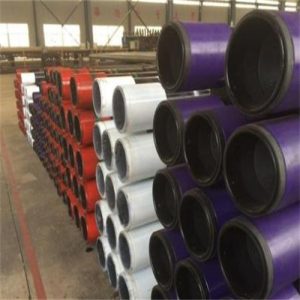
In addition to their mechanical properties, seamless pipes offer advantages in terms of installation and Maintenance. The seamless design allows for easier handling, bending, and Threading of the pipes, simplifying the installation process and reducing labor costs. Moreover, the absence of weld seams eliminates the risk of weld defects or leaks, enhancing the overall safety and reliability of the piping system.
From a cost perspective, while seamless pipes may have a higher initial cost compared to welded pipes, their long-term benefits often outweigh the upfront investment. The durability, reliability, and extended service life of seamless pipes result in lower maintenance costs, reduced downtime, and improved operational efficiency over the lifespan of the pipes.
In conclusion, the use of seamless pipes for casing and tubing offers a range of benefits that make them an ideal choice for critical applications in the oil and gas industry. Their superior strength, durability, internal surface finish, ease of installation, and long-term cost-effectiveness make seamless pipes a preferred option for ensuring the success and sustainability of drilling operations. By leveraging the advantages of seamless pipes, Companies can enhance the performance, reliability, and safety of their oil and gas infrastructure.
– Superior Strength: Seamless pipes offer higher strength compared to welded pipes, making them ideal for applications where structural integrity is crucial, such as in oil and gas wells
Seamless pipes play a crucial role in various industries, particularly in the oil and gas sector, where structural integrity is paramount. One of the key advantages of seamless pipes, especially in applications like casing and Tubing, is their superior strength compared to welded pipes. This strength is derived from the seamless manufacturing process, which eliminates the presence of a weld seam that can be a weak point in the pipe’s structure.
In oil and gas wells, where pipes are subjected to high pressure, corrosive environments, and extreme temperatures, the strength of seamless pipes becomes a critical factor. Seamless pipes are known for their ability to withstand these harsh conditions, ensuring the safe and efficient operation of oil and gas wells.
The absence of a weld seam in seamless pipes also contributes to their enhanced durability. Welded pipes are susceptible to defects and corrosion along the weld line, which can compromise the integrity of the pipe over time. In contrast, seamless pipes offer a smooth, uniform surface without any weak points, reducing the risk of failure and extending the lifespan of the pipe.
Furthermore, seamless pipes provide excellent dimensional accuracy and consistency, ensuring a tight fit and reliable performance in various applications. This precision in manufacturing allows seamless pipes to maintain their shape and structural integrity under high pressure and temperature conditions, making them an ideal choice for critical operations in the oil and gas industry.
Another advantage of seamless pipes is their ability to handle high-pressure applications with ease. The seamless manufacturing process results in pipes that can withstand extreme pressure without the risk of Leakage or failure. This makes seamless pipes well-suited for use in oil and gas wells, where maintaining pressure integrity is essential for efficient production and safety.
Moreover, seamless pipes offer superior Corrosion resistance compared to welded pipes. The absence of a weld seam eliminates the potential weak points where corrosion can initiate, ensuring long-term protection against rust and degradation. This corrosion resistance is particularly important in environments with high levels of moisture, chemicals, or corrosive substances, where the integrity of the pipe is crucial for preventing leaks and ensuring operational efficiency.
In conclusion, seamless pipes are an essential component in the oil and gas industry, providing superior strength, durability, dimensional accuracy, and corrosion resistance for critical applications like casing and tubing. Their seamless construction, free of weld seams, ensures reliable performance under high-pressure and corrosive conditions, making them the preferred choice for demanding operations where structural integrity is paramount.