Durabilité dans la fabrication de carters pétroliers : innovations et tendances
Impact de la numérisation sur la conception et la production de boîtiers pétroliers
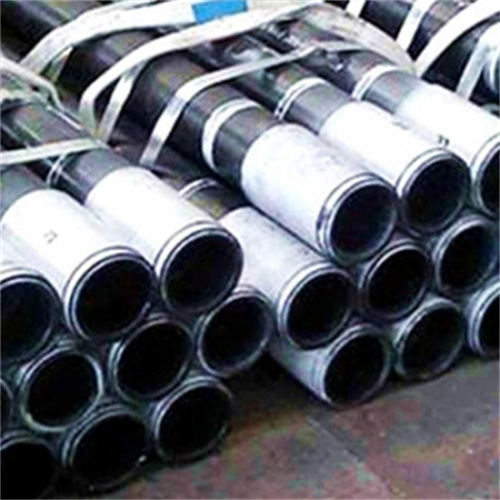
tuyau d’enveloppe Chine fournisseur de haute qualité
Perspectives futures des matériaux recyclables dans la technologie des cuvelages pétroliers
Le tubage pétrolier, un élément essentiel de l’industrie pétrolière et gazière, connaît une évolution transformatrice vers la durabilité et l’efficacité. À mesure que la demande énergétique mondiale évolue et que les préoccupations environnementales s’intensifient, l’avenir des carters pétroliers dépend de la rationalisation de leurs matériaux et de leurs processus de fabrication.
Traditionnellement, les carters pétroliers sont principalement fabriqués en acier, un matériau apprécié pour sa résistance et sa durabilité. Cependant, cette dépendance à l’acier présente des inconvénients importants, notamment des coûts de production élevés, l’impact environnemental de l’extraction et de la transformation, ainsi que des défis en matière de recyclage et d’élimination. Alors que les industries du monde entier sont confrontées à une pression croissante pour adopter des pratiques durables, le secteur pétrolier et gazier explore des alternatives qui peuvent attéNuer ces problèmes sans compromettre les performances.
Une voie prometteuse est le développement et l’utilisation de matériaux recyclables dans la technologie des cuvelages pétroliers. Les innovateurs explorent des composites avancés, des polymères et même des matériaux biodégradables qui offrent une résistance et une résistance à la corrosion comparables aux boîtiers en acier traditionnels. Ces matériaux réduisent non seulement l’empreinte carbone associée à la production de boîtiers, mais facilitent également le recyclage et l’élimination à la fin de leur cycle de vie.
De plus, l’adoption de matériaux recyclables s’aligne sur les tendances plus larges de l’industrie en faveur des principes d’économie circulaire. En concevant des boîtiers dans un souci de recyclabilité, les fabricants peuvent créer des systèmes en boucle fermée dans lesquels les matériaux sont réutilisés ou réutilisés plutôt que jetés. Cette approche non seulement préserve les ressources, mais minimise également les déchets et réduit l’impact environnemental tout au long du cycle de vie du boîtier.
En plus de l’innovation matérielle, les progrès des techniques de fabrication façonnent également l’avenir de la technologie des boîtiers pétroliers. La fabrication additive, communément appelée impression 3D, est devenue une méthode viable pour produire des conceptions de boîtiers complexes avec une réduction des déchets de matériaux. Cette technologie offre une plus grande flexibilité dans la personnalisation de la conception tout en réduisant potentiellement les coûts de production et les délais de livraison.
De plus, la numérisation et les informations basées sur les données optimisent les performances et la longévité des boîtiers. En intégrant des capteurs et des technologies IoT (Internet des objets) dans les systèmes de boîtier, les opérateurs peuvent surveiller des données en temps réel telles que la température, la pression et les niveaux de corrosion. Cette approche proactive permet une détection précoce des problèmes potentiels, améliore l’efficacité opérationnelle et prolonge la durée de vie des matériaux de boîtier.
À mesure que l’industrie continue d’évoluer, les parties prenantes reconnaissent de plus en plus l’importance de la collaboration et du partage des connaissances. Les initiatives visant à normaliser les matériaux recyclables et à faire progresser les pratiques durables dans la technologie des cuvelages pétroliers gagnent du terrain. Les associations industrielles, les instituts de recherche et les gouvernements promeuvent activement la recherche et le développement dans ce domaine, favorisant l’innovation et favorisant l’adoption de solutions respectueuses de l’environnement.
Pour l’avenir, les perspectives d’avenir des matériaux recyclables dans la technologie des cuvelages pétroliers semblent prometteuses mais nécessitent une concertation concertée. efforts de toutes les parties prenantes. Les fabricants doivent continuer à investir dans la recherche et le développement pour perfectionner les matériaux recyclables et optimiser les processus de fabrication. Les opérateurs et les régulateurs doivent collaborer pour établir des normes et des lignes directrices qui favorisent l’adoption de solutions de boîtiers durables sans compromettre la sécurité ou les performances.
En conclusion, la rationalisation de l’avenir du tubage pétrolier grâce à des matériaux recyclables représente une étape importante vers la durabilité et l’efficacité dans l’industrie pétrolière et gazière. En adoptant l’innovation, la collaboration et la gestion responsable des ressources, les parties prenantes peuvent naviguer vers un avenir où la technologie des cuvelages pétroliers non seulement répond, mais dépasse les attentes environnementales tout en répondant aux besoins énergétiques mondiaux.
Oil Casing‘s future is rationalizing. Are you making sense?
In the realm of oil casing design and production, the advent of digitalization marks a transformative era. As industries worldwide embrace technological advancements, the Oil and Gas sector stands at the forefront of integrating digital tools to enhance efficiency, safety, and sustainability. This shift not only streamlines operations but also reshapes the very foundation upon which oil casing systems are conceptualized, designed, and manufactured.
Digitalization in oil casing begins with the exploration phase, where advanced data analytics and simulations play a pivotal role. Geologists and engineers utilize sophisticated software to analyze geological formations with unprecedented accuracy. This enables precise prediction of reservoir characteristics, facilitating informed decisions regarding casing specifications. By leveraging digital twins\—virtual replicas of physical assets\—engineers can simulate various drilling scenarios, optimizing casing design for maximum reliability and performance under diverse conditions.
The design phase itself has undergone a paradigm shift, thanks to digital tools that enable collaborative engineering and r APId prototyping. Computer-aided design (CAD) software allows multidisciplinary teams to iteratively refine casing designs in a virtual environment, enhancing structural integrity while minimizing Material usage. Finite element analysis (FEA) further validates designs by simulating stress, heat, and pressure dynamics, ensuring compliance with rigorous safety standards.
Casing Pipe china high–grade Supplier
Moreover, digitalization has revolutionized manufacturing processes, introducing advanced robotics and additive manufacturing techniques. Automated production lines equipped with robotic arms ensure precise fabrication of casing components, minimizing human error and optimizing production efficiency. Additive manufacturing, or 3D printing, offers unparalleled flexibility in prototyping and small-batch production, accelerating innovation cycles and reducing time-to-market for new casing designs.
Quality assurance in oil casing production has also benefited immensely from digitalization. Real-time monitoring systems equipped with sensors collect and analyze data throughout the manufacturing process, detecting anomalies before they escalate into costly defects. Machine learning algorithms further enhance predictive Maintenance, preemptively identifying equipment failures and optimizing operational uptime.
Beyond production, digitalization extends into the operational lifespan of oil casing systems. IoT-enabled sensors embedded within casings provide continuous performance monitoring, transmitting vital metrics such as temperature, pressure, and corrosion levels to centralized control systems. This real-time data empowers operators to proactively manage casing integrity, mitigating risks of leaks or structural failures that could compromise safety and environmental sustainability.
Furthermore, digitalization fosters a circular economy approach within the oil and gas industry by optimizing casing reuse and recycling. Advanced analytics evaluate casing condition post-extraction, determining suitability for refurbishment or recycling. This reduces waste generation and raw material consumption, aligning with global sustainability goals while optimizing operational costs.
In conclusion, the impact of digitalization on oil casing design and production is profound and multifaceted. By integrating advanced technologies\—from data analytics and simulation to robotics and IoT\—Companies enhance efficiency, safety, and sustainability throughout the casing lifecycle. As the industry continues to evolve, embracing digital transformation not only ensures competitiveness but also underscores a commitment to responsible resource management and environmental stewardship.
The future of oil casing is indeed rationalizing through digitalization, where every decision, from exploration to decommissioning, is informed by data-driven insights and enabled by cutting-edge technology. Are you making sense? Embracing digitalization isn’t just a choice but a necessity for stakeholders aiming to thrive in an increasingly interconnected and technologically advanced world.
Future Prospects of Recyclable Materials in Oil Casing Technology
Oil casing, a critical component in the oil and gas industry, is undergoing a transformative shift towards sustainability and efficiency. As global energy demands evolve and environmental concerns intensify, the future of oil casing hinges on rationalizing its materials and manufacturing processes.
Traditionally, oil casing has been predominantly manufactured using Steel, a material valued for its strength and durability. However, this reliance on steel comes with significant drawbacks, including high production costs, environmental impact from mining and processing, and challenges in recycling and disposal. As industries worldwide face increasing pressure to adopt sustainable practices, the oil and gas sector is exploring alternatives that can mitigate these issues without compromising performance.
One promising avenue is the development and utilization of recyclable materials in oil casing technology. Innovators are exploring advanced composites, polymers, and even biodegradable materials that offer comparable strength and Corrosion resistance to traditional steel casings. These materials not only reduce the carbon footprint associated with casing production but also facilitate easier recycling and disposal at the end of their lifecycle.
Moreover, the adoption of recyclable materials aligns with broader industry trends towards circular economy principles. By designing casings with recyclability in mind, Manufacturers can create closed-loop systems where materials are reused or repurposed rather than discarded. This approach not only conserves resources but also minimizes waste and reduces environmental impact throughout the casing’s lifecycle.
In addition to material innovation, advancements in manufacturing techniques are also shaping the future of oil casing technology. Additive manufacturing, commonly known as 3D printing, has emerged as a viable method for producing complex casing designs with reduced material waste. This technology offers greater flexibility in design customization while potentially lowering production costs and lead times.
Furthermore, digitalization and data-driven insights are optimizing casing performance and longevity. By integrating sensors and IoT (Internet of Things) technologies into casing systems, operators can monitor real-time data such as temperature, pressure, and corrosion levels. This proactive approach enables early detection of potential issues, enhances operational efficiency, and extends the lifespan of casing materials.
As the industry continues to evolve, stakeholders are increasingly recognizing the importance of collaboration and knowledge sharing. Initiatives aimed at standardizing recyclable materials and advancing sustainable practices in oil casing technology are gaining traction. Industry associations, research institutions, and governments are actively promoting research and development in this area, fostering innovation and driving the adoption of eco-friendly solutions.
Looking ahead, the future prospects of recyclable materials in oil casing technology appear promising but require concerted efforts from all stakeholders. Manufacturers must continue to invest in research and development to refine recyclable materials and optimize manufacturing processes. Operators and regulators must collaborate to establish standards and guidelines that promote the adoption of sustainable casing solutions without compromising safety or performance.
In conclusion, the rationalization of oil casing’s future through recyclable materials represents a significant step towards sustainability and efficiency in the oil and gas industry. By embracing innovation, collaboration, and responsible stewardship of resources, stakeholders can navigate towards a future where oil casing technology not only meets but exceeds environmental expectations while supporting global energy needs.