Selection Criteria for Oil Casing Anticorrosion Materials
Choosing the right anticorrosion material for oil casing is crucial for ensuring the longevity and safety of Oil Wells in various operational environments. The selection process involves careful consideration of several key factors to match the specific application requirements effectively.
Primarily, the choice of anticorrosion material hinges on the environmental conditions in which the oil casing will operate. Factors such as temperature, pressure, pH levels of the fluids, presence of corrosive elements like hydrogen sulfide (H2S), and oxygen content play pivotal roles. Understanding these conditions is fundamental as they dictate the type of corrosion mechanisms that the casing material will encounter, be it uniform corrosion, localized corrosion, or stress corrosion cracking.
Another critical consideration is the mechanical strength required to withstand the stresses imposed during drilling, completion, and production phases. The material selected must exhibit adequate tensile strength, toughness, and resistance to deformation under operational loads and environmental conditions. Additionally, factors such as ease of installation, Maintenance requirements, and compatibility with other downhole equipment need to be evaluated to ensure seamless integration into the oil well infrastructure.
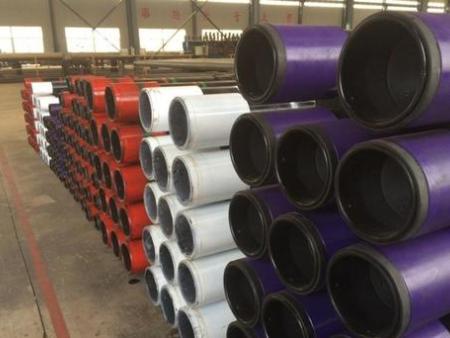
Materials commonly used for anticorrosion protection include various grades of Stainless Steel, corrosion-resistant alloys (CRAs) like duplex stainless steels, nickel alloys, and non-metallic coatings such as epoxy, polyurethane, and thermoplastics. Each material type offers distinct advantages depending on the specific application scenario.
Stainless steels, for instance, are renowned for their general Corrosion resistance and mechanical properties, making them suitable for moderately corrosive environments. Duplex stainless steels combine the benefits of austenitic and ferritic steels, providing enhanced strength and resistance to chloride-induced stress corrosion cracking, making them ideal for offshore and harsh environments.
Nickel alloys are preferred for their superior resistance to high temperatures, acids, and alkalis, making them suitable for extreme conditions encountered in deep wells or wells with high H2S content. These materials are cHosen when conventional steels or CRAs may not provide adequate protection against aggressive corrosion agents.
china Best Maker
Non-metallic coatings such as epoxy and polyurethane offer cost-effective solutions for mild to moderate corrosive environments. These coatings provide a barrier between the casing material and corrosive fluids, thereby extending the service life of the casing and reducing maintenance costs. Thermoplastic liners are used in wells where resistance to chemical attack and abrasion is critical, offering excellent performance in corrosive environments.
In selecting the appropriate anticorrosion material, engineers and operators must also consider the economic aspects, including initial costs, installation expenses, operational longevity, and potential cost savings from reduced maintenance and downtime. Life cycle cost analysis helps in evaluating the overall economic feasibility of each material option over the expected operational lifespan of the well.
Moreover, compliance with industry standards and regulations governing material selection and performance is imperative. Standards such as NACE (National Association of Corrosion Engineers) MR0175 provide guidelines for selecting materials based on their resistance to sulfide stress cracking in oilfield environments. Adherence to these standards ensures that the chosen anticorrosion material meets minimum performance criteria and enhances operational safety and reliability.
Lastly, ongoing research and development in materials science contiNue to introduce new alloys and coatings with improved corrosion resistance and mechanical properties. Keeping abreast of these advancements enables operators to explore innovative solutions that optimize well performance and longevity.
In conclusion, the selection of oil casing anticorrosion materials demands a comprehensive understanding of environmental conditions, mechanical requirements, economic considerations, and regulatory compliance. By carefully evaluating these factors and leveraging advancements in materials technology, operators can make informed decisions that enhance the integrity and durability of Oil Well Casings in diverse operational settings.
Comparative Analysis of Commonly Used Anticorrosion Materials
Choosing the right oil casing anticorrosion material is crucial for ensuring the longevity and integrity of oil wells in various operational conditions. The selection process involves a careful evaluation of several factors, including environmental conditions, operational requirements, and cost-effectiveness. In this comparative analysis, we examine commonly used anticorrosion materials to guide the selection process for specific application situations.
One of the most widely used materials for oil casing anticorrosion is cement sheathing. Cement provides excellent protection against corrosion by forming a barrier between the casing and the surrounding environment. It is particularly effective in environments with high salinity or acidity, where corrosive agents can r APIdly degrade metal surfaces. Cement sheathing also offers thermal insulation, which can be advantageous in wells where temperature differentials between the casing and formation are significant. However, its application requires careful attention to cement quality and installation procedures to ensure uniform coverage and durability.
Another popular choice is epoxy coating, known for its robust protection against both internal and external corrosion. Epoxy coatings are applied as a thin layer over the metal casing, providing a Smooth and impermeable barrier. They are highly resistant to chemicals, abrasion, and mechanical damage, making them suitable for harsh operating conditions such as offshore drilling and high-pressure environments. Epoxy coatings can be tailored to specific environmental challenges, including resistance to hydrogen sulfide (H2S) and carbon dioxide (CO2), which are common corrosive elements in Oil and Gas production.
In contrast, thermoplastic coatings offer versatility and ease of application. Materials such as polyethylene (PE) and polypropylene (PP) are used to create durable protective layers that adhere well to metal surfaces. Thermoplastics are particularly valued for their flexibility, impact resistance, and ability to withstand temperature variations. They are suitable for both onshore and offshore applications, where they provide effective protection against corrosion, abrasion, and environmental stressors. However, proper surface preparation is essential to ensure adhesion and long-term performance.
Zinc-rich primers represent another category of anticorrosion materials that rely on sacrificial protection. These primers contain a high concentration of zinc particles, which act as a sacrificial anode to protect the underlying metal from corrosion. Zinc-rich coatings are effective in environments where mechanical damage is a concern, as they can provide localized protection to exposed areas. They are often used in conjunction with other anticorrosion methods to enhance overall durability and performance.
When evaluating anticorrosion materials for oil casing applications, engineers must consider not only the protective properties but also the practical aspects of application and maintenance. Factors such as installation complexity, curing time, and compatibility with other downhole equipment play a crucial role in decision-making. Furthermore, cost-effectiveness over the lifecycle of the well must be weighed against initial investment costs.
In conclusion, the choice of oil casing anticorrosion material should be guided by a comprehensive assessment of environmental conditions, operational requirements, and economic considerations. Each type of material offers unique advantages and challenges, and the optimal solution may vary depending on specific application scenarios. By understanding the comparative strengths and limitations of commonly used anticorrosion materials, engineers can make informed decisions that ensure the long-term integrity and reliability of oil wells in diverse operational environments.
Case Studies of Anticorrosion Material Applications
In the realm of oil casing anticorrosion, selecting the appropriate material is paramount to ensuring the longevity and reliability of oil wells and Pipelines. The choice of anticorrosion material hinges on various factors specific to each application scenario, including environmental conditions, operational requirements, and economic considerations.
One significant consideration is the type of corrosive agents prevalent in the operating environment. For instance, coastal regions with high humidity and exposure to saltwater demand materials with exceptional resistance to chloride-induced corrosion. In such cases, stainless steels like duplex or super duplex grades are preferred due to their superior corrosion resistance properties compared to conventional Carbon steels.
Temperature and pressure conditions also dictate the suitability of anticorrosion materials. In high-pressure, high-temperature (HPHT) environments, where conditions can accelerate corrosion processes, alloys like nickel-based alloys or titanium grades are often chosen for their ability to withstand extreme conditions without compromising structural integrity. These materials offer robust resistance to both general and localized corrosion, making them ideal for challenging operational settings.
Furthermore, the compatibility of anticorrosion materials with other components in the well or pipeline system is crucial. In oil and gas operations, where multiple materials and alloys may be in contact, the risk of galvanic corrosion must be mitigated. Selecting materials with similar electrochemical potentials helps prevent galvanic corrosion, thereby preserving the integrity of the entire system over its operational lifespan.
Cost-effectiveness is another pivotal factor in material selection. While advanced alloys offer superior corrosion resistance, they often come at a higher cost compared to traditional materials. Conducting a thorough cost-benefit analysis considering installation, maintenance, and operational longevity is essential to making an economically sound decision. In some cases, applying corrosion-resistant coatings or inhibitors to less expensive materials can provide a cost-effective alternative without compromising performance.
Real-world case studies illustrate the critical importance of tailored material selection. In offshore drilling operations, where platforms are subjected to harsh marine environments, a major oil Company opted for corrosion-resistant alloys (CRAs) to extend equipment life and minimize downtime due to maintenance. By investing in high-quality anticorrosion materials upfront, they achieved significant savings in operational costs over the project’s lifecycle.
Similarly, in onshore applications exposed to acidic or saline conditions, operators have successfully employed composite materials reinforced with corrosion-resistant fibers. These composites offer a lightWeight, durable solution that enhances structural integrity while mitigating corrosion risks effectively.
In summary, the process of selecting oil casing anticorrosion materials involves a meticulous evaluation of environmental factors, operational requirements, economic considerations, and compatibility with existing infrastructure. By leveraging advancements in materials science and engineering, operators can optimize asset performance, maximize operational uptime, and ensure sustainable energy production in challenging environments.
Ultimately, the goal is to make informed choices that align with the specific demands of each application scenario, thereby safeguarding infrastructure investments and enhancing the overall reliability of oil and gas operations. Through strategic material selection and proactive corrosion management strategies, industry stakeholders can navigate the complexities of anticorrosion technology and achieve long-term success in energy exploration and production endeavors.