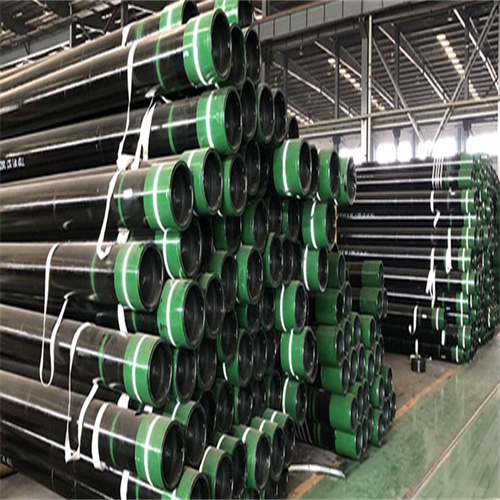
Importance of Quality Testing in Oil Casing Manufacturing
Quality testing in oil casing manufacturing is a critical process that ensures the reliability and safety of the final product. The integrity of oil casings is paramount in the Oil and Gas industry, as they play a crucial role in maintaining wellbore stability and preventing environmental hazards. Testing the manufacturing quality of oil casings involves a series of rigorous procedures to detect any defects or weaknesses that could compromise their performance.
 One of the primary methods used to test the quality of oil casings is Non-destructive testing (NDT). NDT techniques such as ultrasonic testing, magnetic particle testing, and liquid penetrant testing are commonly employed to inspect the integrity of the casings without causing any damage. These methods allow Manufacturers to identify surface and subsurface defects, such as cracks, porosity, and inclusions, that could affect the structural integrity of the casing.
Ultrasonic testing is particularly effective in detecting internal defects in oil casings by sending high-frequency sound waves through the Material and analyzing the reflected signals. This method provides detailed information about the thickness and integrity of the casing, helping manufacturers identify any areas of concern that require further inspection or Repair.
Magnetic particle testing is another valuable technique used to detect surface defects in oil casings. By applying a magnetic field to the casing and then introducing magnetic particles to the surface, manufacturers can easily identify cracks, seams, and other imperfections that may compromise the casing’s strength and durability.
Liquid penetrant testing is a widely used method for detecting surface defects in oil casings that are not readily visible to the naked eye. This technique involves applying a liquid penetrant to the surface of the casing, allowing it to seep into any surface cracks or imperfections. After a specified dwell time, the excess penetrant is removed, and a developer is applied to highlight any indications of defects.
In addition to NDT techniques, manufacturers also conduct mechanical testing to assess the physical properties of oil casings. Tensile testing, hardness testing, and impact testing are commonly used to evaluate the strength, ductility, and toughness of the casing material. These tests help manufacturers determine whether the casing can withstand the mechanical stresses and pressures encountered during drilling and production operations.
Steel piping china Best ExportersFurthermore, dimensional inspection is essential to ensure that oil casings meet the specified dimensional tolerances and requirements. Manufacturers use precision measuring tools such as calipers, micrometers, and gauges to verify the outer Diameter, Wall thickness, and Length of the casing. Any deviations from the specified dimensions can indicate manufacturing defects or inconsistencies that need to be addressed.
Overall, quality testing plays a crucial role in ensuring the reliability, safety, and performance of oil casings in the oil and gas industry. By employing a combination of NDT techniques, mechanical testing, and dimensional inspection, manufacturers can identify and rectify any defects or deficiencies in the manufacturing process, ultimately enhancing the quality and integrity of the final product.