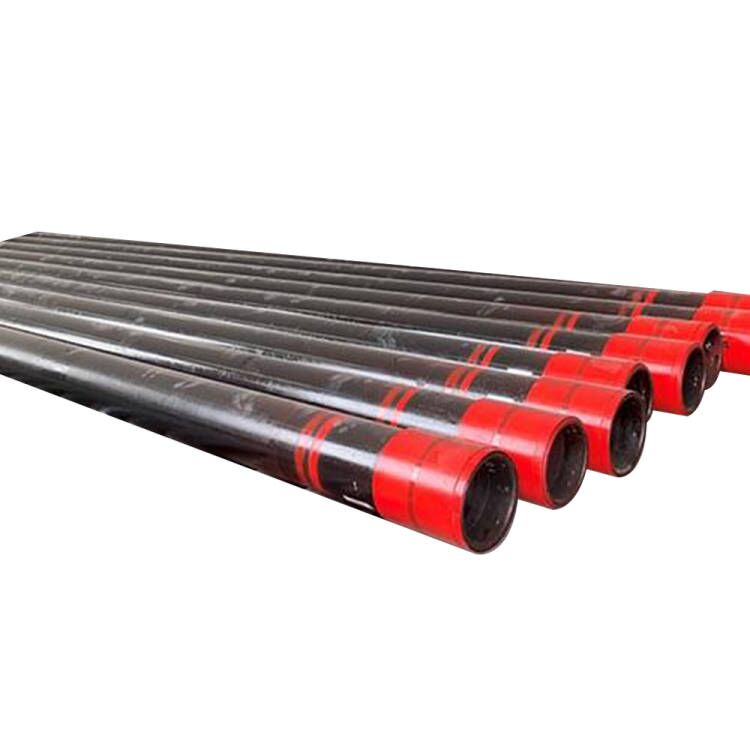
Présentation des spécifications des tubes et boîtiers API 5ct l80
Facteurs affectant la résistance à la tension dans les tuyaux API 5CT L80
La résistance à la tension des tubes de tubage et de tubage API 5CT L80 est un facteur essentiel pour garantir l’intégrité et la fiabilité des puits de pétrole et de gaz. Plusieurs facteurs influencent cette résistance, et leur compréhension est essentielle pour les ingénieurs et opérateurs impliqués dans les activités de forage et de production. L’un des principaux facteurs affectant la résistance à la traction réside dans les propriétés matérielles du tuyau lui-même. Les tuyaux API 5CT L80 sont fabriqués à partir d’acier à haute résistance, conçu pour résister à des charges de traction importantes. La composition chimique et les propriétés mécaniques de l’acier, y compris la limite d’élasticité et la résistance à la traction, jouent un rôle essentiel dans la détermination de la capacité du tuyau à résister à la tension. Une limite d’élasticité plus élevée se traduit généralement par de meilleures performances sous contrainte de traction, ce qui rend crucial la sélection de tuyaux qui respectent ou dépassent les normes spécifiées.
En plus des propriétés des matériaux, le processus de fabrication des tuyaux a également un impact sur leur résistance à la tension. Les méthodes utilisées dans la production des tubes API 5CT L80, telles que les processus de traitement thermique, peuvent améliorer les propriétés mécaniques de l’acier. Par exemple, des processus tels que la trempe et le revenu peuvent améliorer la ténacité et la ductilité, essentielles à la gestion des charges dynamiques lors des opérations de forage. De plus, les mesures de contrôle qualité mises en œuvre lors de la fabrication, y compris les tests non destructifs, garantissent que tout défaut ou incohérence dans le matériau est identifié et corrigé, améliorant ainsi la fiabilité globale des tuyaux.
Un autre facteur important influençant la résistance à la tension est la résistance du tuyau. géométrie. Les dimensions du tuyau, notamment son diamètre extérieur, son épaisseur de paroi et sa longueur, affectent directement sa capacité à résister aux forces de traction. Les parois plus épaisses offrent généralement une plus grande résistance à la tension, mais elles ajoutent également du poids, ce qui peut compliquer la manipulation et l’installation. Par conséquent, les ingénieurs doivent soigneusement équilibrer le besoin de résistance avec les considérations pratiques liées au poids et à la facilité d’installation. De plus, la conception des connexions entre les tuyaux, telles que les joints filetés ou soudés, peut également avoir un impact sur la résistance à la traction. Des connexions correctement conçues et exécutées sont essentielles pour maintenir l’intégrité de l’ensemble du système sous charge.
Les conditions environnementales jouent également un rôle crucial dans la résistance à la tension des tuyaux API 5CT L80. Des facteurs tels que la température, la pression et la présence de substances corrosives peuvent affecter les performances des canalisations au fil du temps. Par exemple, des températures élevées peuvent entraîner une dilatation thermique, ce qui peut induire des contraintes supplémentaires dans la canalisation. De même, les environnements corrosifs peuvent affaiblir le matériau, réduisant ainsi sa résistance globale et sa résistance à la tension. Par conséquent, il est essentiel de prendre en compte les conditions environnementales spécifiques du site de forage lors de la sélection et de l’installation des tuyaux de tubage et de tubage.
Méthodes de test de résistance à la tension dans les boîtiers et tubes API 5CT L80

La spécification API 5CT L80 pour les tubages et les tubes est cruciale dans l’industrie pétrolière et gazière, en particulier pour les applications qui nécessitent une résistance et une durabilité élevées. L’une des principales caractéristiques de performance de ces conduites est leur résistance à la traction, essentielle pour garantir l’intégrité et la sécurité des opérations de forage. Pour évaluer la résistance à la traction des boîtiers et tubes API 5CT L80, diverses méthodes d’essai sont utilisées, chacune étant conçue pour évaluer la capacité du matériau à résister aux forces de traction sans rupture.
L’une des méthodes les plus courantes pour tester la résistance à la traction est l’essai de traction, qui consiste à appliquer une charge uniaxiale sur un échantillon du boîtier ou du tube jusqu’à ce qu’il se fracture. Ce test fournit des données précieuses sur la limite d’élasticité, la résistance à la traction ultime et l’allongement du matériau. En mesurant ces paramètres, les ingénieurs peuvent déterminer si le tuyau répond aux spécifications requises en matière de résistance à la traction. L’essai de traction est généralement effectué conformément aux normes établies, garantissant la cohérence et la fiabilité des résultats.
tuyauterie en acier Meilleure usine chinoiseEn plus de l’essai de traction, d’autres méthodes telles que l’essai d’éclatement et l’essai d’effondrement peuvent également fournir un aperçu des performances. de tubes API 5CT L80 sous tension. Le test d’éclatement consiste à soumettre le tuyau à une pression interne jusqu’à sa rupture, tandis que le test d’effondrement évalue la capacité du tuyau à résister à la pression externe. Bien que ces tests se concentrent principalement sur la résistance à la pression, ils contribuent indirectement à la compréhension des propriétés mécaniques globales du matériau, notamment sa résistance à la traction. En analysant les résultats de ces tests, les ingénieurs peuvent acquérir une compréhension globale des performances du tuyau dans des conditions réelles.
Un autre aspect important des tests de résistance à la traction est l’évaluation de la microstructure du tuyau. L’analyse métallurgique, y compris des techniques telles que la microscopie électronique à balayage (MEB) et la microscopie optique, peut révéler la structure des grains et la distribution des phases au sein du matériau. Ces caractéristiques jouent un rôle important dans la détermination des propriétés de traction du tuyau. En corrélant les caractéristiques microstructurales avec les performances mécaniques, les chercheurs peuvent identifier les faiblesses potentielles et optimiser le processus de fabrication pour améliorer la résistance à la tension.
De plus, l’impact de divers facteurs tels que la température, la corrosion et les processus de fabrication sur la résistance à la tension ne peut être négligé. Par exemple, des températures élevées peuvent entraîner une réduction de la limite d’élasticité, tandis que des environnements corrosifs peuvent compromettre l’intégrité du matériau. Il est donc essentiel d’effectuer des tests simulant les conditions que les conduites rencontreront sur le terrain. Cette approche garantit que les tubages et tubes API 5CT L80 sont non seulement conformes aux spécifications, mais également capables de fonctionner de manière fiable dans des conditions difficiles.
En conclusion, les méthodes de test de résistance à la traction dans les tubages et tubes API 5CT L80 sont multiformes et critiques. pour assurer la sécurité et l’efficacité des opérations de forage. Grâce à des tests de traction, des tests d’éclatement, des tests d’effondrement et des analyses métallurgiques, les ingénieurs peuvent évaluer les propriétés mécaniques du matériau et sa capacité à résister aux forces de traction. En comprenant l’interaction entre la microstructure, les facteurs environnementaux et les performances mécaniques, l’industrie peut contiNuer à améliorer la conception et la fabrication des tubes de tubage et de tubage, conduisant à terme à des processus d’extraction de pétrole et de gaz plus sûrs et plus efficaces. Le développement continu des méthodologies de test améliorera encore la fiabilité de ces composants essentiels dans le secteur de l’énergie.
Testing Methods for Tension Resistance in API 5CT L80 Casing and Tubing
The API 5CT L80 casing and Tubing Pipe specification is crucial in the Oil and Gas industry, particularly for applications that require high strength and durability. One of the key performance characteristics of these Pipes is their tension resistance, which is essential for ensuring the integrity and safety of drilling operations. To evaluate the tension resistance of API 5CT L80 casing and Tubing, various testing methods are employed, each designed to assess the Material‘s ability to withstand tensile forces without failure.
One of the most common methods for testing tension resistance is the tensile test, which involves applying a uniaxial load to a sample of the casing or tubing until it fractures. This test provides valuable data on the yield strength, ultimate tensile strength, and elongation of the material. By measuring these parameters, engineers can determine whether the pipe meets the required specifications for tension resistance. The tensile test is typically conducted in accordance with established standards, ensuring consistency and reliability in the results.
Steel piping Best china FactoryIn addition to the tensile test, other methods such as the burst test and collapse test can also provide insights into the performance of API 5CT L80 pipes under tension. The burst test involves subjecting the pipe to internal pressure until it fails, while the collapse test assesses the pipe’s ability to withstand external pressure. Although these tests primarily focus on pressure resistance, they indirectly contribute to understanding the overall mechanical properties of the material, including its tension resistance. By analyzing the results of these tests, engineers can gain a comprehensive understanding of how the pipe will perform in real-world conditions.
Another important aspect of testing tension resistance is the evaluation of the pipe’s microstructure. Metallurgical analysis, including techniques such as scanning electron microscopy (SEM) and optical microscopy, can reveal the grain structure and phase distribution within the material. These characteristics play a significant role in determining the tensile properties of the pipe. By correlating microstructural features with mechanical performance, researchers can identify potential weaknesses and optimize the manufacturing process to enhance tension resistance.
Furthermore, the impact of various factors such as temperature, corrosion, and manufacturing processes on tension resistance cannot be overlooked. For instance, high temperatures can lead to a reduction in yield strength, while corrosive environments can compromise the integrity of the material. Therefore, it is essential to conduct tests that simulate the conditions the pipes will encounter in the field. This approach ensures that the API 5CT L80 casing and tubing are not only compliant with specifications but also capable of performing reliably under challenging conditions.
In conclusion, the testing methods for tension resistance in API 5CT L80 casing and tubing pipes are multifaceted and critical for ensuring the safety and effectiveness of drilling operations. Through tensile tests, burst tests, collapse tests, and metallurgical analysis, engineers can assess the mechanical properties of the material and its ability to withstand tensile forces. By understanding the interplay between microstructure, environmental factors, and mechanical performance, the industry can continue to improve the design and manufacturing of casing and tubing pipes, ultimately leading to safer and more efficient oil and gas extraction processes. The ongoing development of testing methodologies will further enhance the reliability of these essential components in the energy sector.