**Exploring the World of Pipe Dimensions and Weights: An In-Depth Analysis**
In the realm of industrial manufacturing and engineering, the understanding of pipe dimensions and weights holds paramount importance. These seemingly mundane characteristics play a crucial role in determining the efficiency and integrity of various systems where Pipes are applied. By delving deep into this subject, one can appreciate the intricate balance of design, practicality, and science that goes into the creation and application of these essential industrial components.
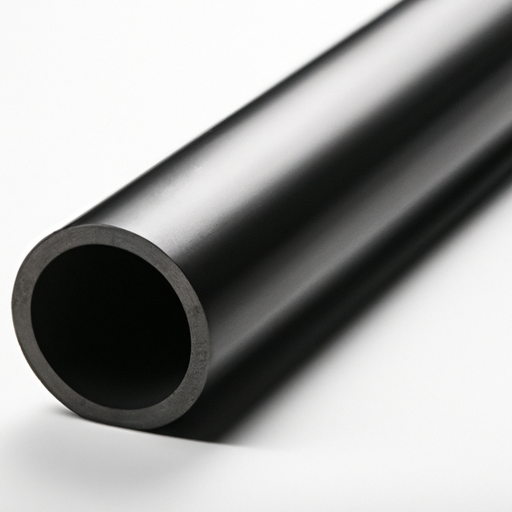
Commencing the exploration, it is essential to grasp the fundamental aspects of pipe dimensions. Predominantly, the dimensions of a pipe include its Diameter, Wall thickness, and Length. The diameter, often referred to as ‘nominal diameter,’ is not an exact measure of the pipe’s physical diameter. Instead, it is a dimension that allows the compatibility of different pipes and fittings in a standard system.
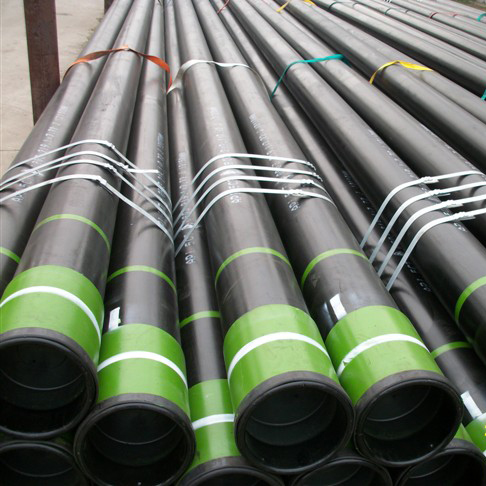
In addition, the wall thickness is another critical dimension, which is contingent on the pipe’s intended use. A thicker wall offers superior strength and resistance to internal pressures, thus often found in high-pressure systems. Conversely, pipes used for lower pressure systems or for structural purposes may have thinner walls.
Steel
Transitioning from pipe dimensions to weights, one must comprehend that the weight of a pipe is primarily dictated by its dimensions and the Material from which it is made. More specifically, the weight per unit length, often referred to as the ‘weight per foot’ or ‘weight per meter,’ is typically used in industry. This parameter is crucial for practical reasons, such as handling, transportation, and installation, as well as for engineering calculations related to strength and stress.
Casing Pipe,casing well pipe, casing supreme pipe, casing vs carrier pipe, casing for ac pipe, casing Steel Pipe, casing pipe size, casing pvc pipe Price, casing pipe, casing pipe Suppliers in china, casing capping pipe, casing drill pipe,carrier pipe,casing pipe size,bushing flange,bushing Sleeve,bushing,bushing arm,bushing bearing,bushing reducer,bushing tool,bushing pvc,bushing meaning
Moreover, understanding the weight of a pipe is equally essential when considering the overall integrity and safety of the piping system. A heavier pipe, due to larger dimensions or denser material, will place more stress on its supports and Connections, potentially leading to failure if not properly accounted for.
To conclude, the science behind pipe dimensions and weights is a fascinating and complex subject that plays a vital role in numerous aspects of modern industry and engineering. A thorough understanding of these parameters not only aids in the design and operation of efficient piping systems but also contributes to the safe and sound operation of these systems. Thus, exploring the world of pipe dimensions and weights is not merely an academic exercise, but a necessity for tHose involved in the design, manufacture, and use of these indispensable industrial components.
**Navigating the Complexities of Pipe Dimensions and Weights: A Comprehensive Guide**
Understanding pipe dimensions and weights can be a complex task, especially for those who are not well-versed in the ins and outs of the piping industry. However, it is a critical aspect that requires meticulous attention, given its influence on the functionality and efficiency of piping systems. This article provides a comprehensive guide to help you navigate the intricacies of pipe dimensions and weights.

The most important thing to understand about pipe dimensions is that they are not simply a measure of the pipe’s size. Rather, they reflect a range of characteristics including the pipe’s diameter, wall thickness, and length. The diameter refers to the distance from one side of the pipe to the other, passing through the center. The wall thickness, on the other hand, is the distance between the inner and outer surfaces of the pipe. Lastly, the length of the pipe is typically measured from end to end. It’s crucial to remember that these dimensions are interrelated and changes to one can impact the others.
pipe weights, too, are more complex than they might initially appear. The primary factors influencing pipe weight are the material from which the pipe is made and its dimensions. Different materials have different densities, which directly affect the weight of the pipe. For instance, a pipe made from steel will weigh more than a pipe of the same size made from aluminium due to the higher density of steel.
Moreover, the way in which pipe dimensions interact with weight is critical. A longer pipe will weigh more than a shorter one of the same diameter and wall thickness, and a pipe with a greater diameter or thicker wall will weigh more than a smaller or thinner pipe of the same length. Understanding this relationship is key when selecting pipes for specific applications, as the weight can impact both the cost and feasibility of installation.
Additionally, it’s important to consider the implications of pipe dimensions and weights on the pipe’s performance. For example, a pipe with a larger diameter will be able to transport more fluid at a time than a pipe with a smaller diameter. However, a pipe with a thicker wall will be sturdier and better able to withstand high pressures. Therefore, identifying the optimal dimensions and weight for a particular application requires a careful balance of these considerations.
Furthermore, international standards play a significant role in defining pipe dimensions and weights. Standardization bodies such as the American Society for Testing and Materials (ASTM) and the International Organization for Standardization (ISO) set parameters to ensure compatibility and interoperability of pipes across different regions and applications. Familiarity with these standards is essential when sourcing pipes, especially for international projects.
In conclusion, navigating the complexities of pipe dimensions and weights requires a deep understanding of the inter